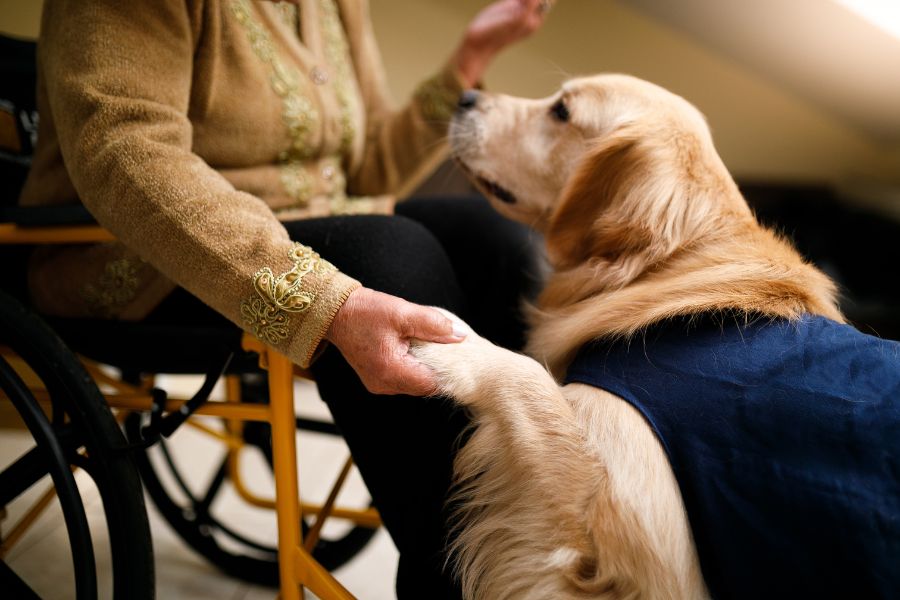
In the hustle and bustle of modern life, finding solace and support for our mental well-being can sometimes feel like a daunting task. Amidst this chaos, therapy dogs emerge as furry angels, offering companionship, comfort, and unwavering love.
These remarkable canines aren’t just pets; they’re healers with wagging tails and wet noses, bringing a multitude of benefits to those struggling with mental health issues. The benefits of therapy dogs for mental health are widely recognized, as their presence has a profound impact on emotional and psychological well-being. In this blog, we help you understand what therapy dogs are and explore how their presence can positively impact our mental well-being.
Understanding Therapy Dogs
Therapy dogs are specially trained canines that provide comfort, affection, and support to people in various settings. Unlike service dogs, which are trained to perform specific tasks for individuals with disabilities, therapy dogs are trained to interact with and provide emotional support to a wide range of people, including those experiencing stress, anxiety, depression, or loneliness.This leads us to the question, “What do therapy dogs do?”
Here are some key characteristics and traits of therapy dogs:
- Temperament: Therapy dogs typically have calm, gentle, and friendly temperaments. They must be comfortable interacting with strangers of all ages, including children, adults, and seniors.
- Obedience: Therapy dogs undergo obedience training to ensure that they respond reliably to commands from their handlers. They must be well-behaved and able to remain calm and focused in various environments and situations.
- Socialization: Therapy dogs are extensively socialized from a young age to expose them to different people, places, and experiences. This helps them feel comfortable and confident in a wide range of settings.
- Empathy: Therapy dogs have a natural ability to sense and respond to people’s emotions. They are empathetic creatures that can provide comfort and support to individuals who may be experiencing distress or emotional difficulties.
- Training: While therapy dogs do not require the same level of intensive training as service dogs, they still undergo specialized training to prepare them for their role. This training focuses on obedience, socialization, and specific skills needed for therapy work, such as remaining calm in crowds and being comfortable with various forms of physical contact.
- Certification: Many therapy dogs are certified through organizations that oversee therapy dog programs and ensure that dogs and handlers meet certain standards and criteria. Certification typically involves passing a temperament evaluation and completing training requirements.
- Volunteer Work: Therapy dogs and their handlers often volunteer their time to visit hospitals, nursing homes, schools, libraries, and other facilities where their presence can provide comfort and support to individuals in need. They may also participate in community events and crisis response efforts.
5 Key Benefits: Why are therapy dogs important?
Therapy dogs play a crucial role in promoting emotional well-being and providing comfort and support to people in various settings. Here are several reasons why are therapy dogs important:
1. Alleviating Anxiety and Stress
One of the most profoundbenefits of therapy dogs for mental health is their ability to alleviate anxiety and stress. The simple act of petting a dog can trigger the release of oxytocin, a hormone known for its calming and bonding effects. This natural chemical reaction helps reduce cortisol levels, the primary stress hormone, leading to feelings of relaxation and tranquility. Whether it’s the gentle nuzzle of a snout or the rhythmic thump of a tail, therapy dogs have an innate ability to soothe frazzled nerves and provide much-needed relief from the pressures of daily life.
2. Easing Depression and Loneliness
Depression and loneliness can cast a dark shadow over our lives, making each day feel like an uphill battle. However,the benefits of therapy dogs for mental health are evident in their remarkable knack for brightening even the darkest of days. t Their unconditional love and nonjudgmental presence offer a beacon of hope to those struggling with mental health issues. Simply having a furry friend by your side can lift your spirits, provide companionship, and remind you that you’re never alone in your journey towards healing.
3. Promoting Social Interaction
For individuals grappling with social anxiety or isolation, therapy dogs can serve as invaluable icebreakers, facilitating meaningful social interaction.The benefits of therapy dogs for mental health are particularly evident in these moments, as they help individuals overcome barriers to communication. Whether it’s striking up a conversation with fellow dog lovers at a therapy dog session or simply exchanging smiles with passersby while out for a walk, these furry ambassadors help bridge the gap between people, fostering connections and a sense of belonging. In a world where digital screens often replace face-to-face interaction, the presence of therapy dogs reminds us of the joy and warmth that comes from genuine human connection.
4. Boosting Mood and Emotional Well-being
The infectious joy and boundless enthusiasm of therapy dogs have a profound impact on our mood and emotional well-being. Among the various benefits of therapy dogs for mental health, their playful antics and unconditional affection stand out, as they have a way of lifting our spirits and bringing a smile to our faces, even on the gloomiest of days. Whether it’s engaging in a game of fetch, going for a leisurely stroll, or simply cuddling up on the couch, spending time with a therapy dog can infuse our lives with a sense of joy, purpose, and positivity.
5. Providing Comfort in Times of Crisis
During times of crisis or trauma, the presence of a therapy dog can provide much-needed comfort and emotional support. These four-legged heroes are trained to offer gentle reassurance and a calming presence to individuals facing challenging situations, whether it’s a natural disaster, a medical emergency, or the aftermath of a traumatic event. Their unconditional love and unwavering loyalty serve as a source of strength and resilience, helping us navigate through life’s toughest moments with courage and grace.The benefits of therapy dogs for mental health are especially apparent during these critical times, as they offer not just companionship but also a lifeline of emotional stability, making a profound difference in the recovery process.
Can dogs sense depression and anxiety?
Yes, dogs have a remarkable ability to sense changes in their owners’ behavior and emotions, including depression and anxiety. While they may not understand these emotions in the same way humans do, they can pick up on subtle cues such as body language, tone of voice, and scent.So, when people ask, “Can dogs sense depression and anxiety?”, it’s clear that their intuitive nature allows them to offer comfort and support, helping us cope with these challenging emotions.
Here are some ways dogs may detect depression and anxiety in their owners:
- Body Language: Dogs are highly attuned to body language, and they can often sense when their owners are feeling down or anxious based on their posture, facial expressions, and movements. For example, a dog may notice if their owner is slouching, avoiding eye contact, or exhibiting tense body language.
- Changes in Routine: Dogs are creatures of habit, and they pay attention to their owners’ daily routines. Changes in routine, such as lack of appetite, irregular sleep patterns, or decreased activity levels, may indicate that something is amiss and prompt a dog to show concern.
- Emotional Cues: Dogs are experts at reading human emotions, and they can pick up on subtle changes in their owners’ moods. They may sense if their owner is feeling sad, anxious, or stressed, and they may respond with comforting behaviors such as cuddling, licking, or offering a paw.
- Scent Detection: Dogs have a highly developed sense of smell, and they can detect changes in their owners’ scent that may be associated with emotional distress. Research has shown that dogs can distinguish between different emotional states based on the chemical changes that occur in a person’s body when they are experiencing stress or anxiety.
- Empathetic Response: Dogs are naturally empathetic creatures, and they often mirror their owners’ emotions. If they sense that their owner is feeling down or anxious, they may become more subdued or affectionate in an attempt to provide comfort and support.
Reduced stress levels with therapy dogs for mental health – get started today!
Understanding the positive impact of therapy dogs on mental health is crucial for promoting emotional well-being. At Uncover Mental Health Counseling, we recognize the therapeutic value of canine companionship and the benefits of therapy dogs for mental health.
. Here’s how you can get started with therapy dogs that can benefit your mental health:
- Schedule a Free 15 Min Consultation: Connect with Uncover Mental Health Counseling for a complimentary consultation call. Let’s explore the benefits of therapy dogs for mental health, discuss how they can support your emotional needs, and outline personalized steps for integrating them into your wellness routine.
- Expert Guidance on Animal-Assisted Therapy: Work with our experienced counselors who specialize in animal-assisted therapy. Together, we’ll discuss the emotional benefits of interacting with therapy dogs, explore stress reduction techniques, and develop strategies to enhance your overall well-being.
- Promote Emotional Resilience: Cultivate a supportive environment where therapy dogs provide companionship, reduce anxiety, and offer unconditional support. Our team offers practical insights, therapeutic exercises, and ongoing support to empower you in leveraging the healing power of therapy dogs.