
Explore Piaget stages of development and how understanding cognitive development informs therapy in NYC, including CBT, ACT, and trauma-focused treatments.
The field of psychology has long been influenced by foundational theories that shape how we understand human behavior and development. One of the most influential of these theories is Jean Piaget’s stages of cognitive development. Known for outlining a framework that tracks how children acquire knowledge and think about the world, Piaget stages remain crucial not only for developmental psychology but also for informing therapeutic practices across the lifespan.
In a bustling, complex city like New York, where mental health needs span from childhood to adulthood, understanding how the Piaget stages of development interact with emotional and behavioral patterns is essential for effective therapy. Whether you’re working with an Anxiety Therapist in NYC, addressing trauma through Prolonged Exposure Therapy, or seeking support from a DBT Therapist NYC, the principles of cognitive development offer invaluable insight.
In this article, we’ll dive into the Piaget stages, connect them to real-life therapeutic applications, and show how they help guide treatments from Cognitive Behavioral Therapy NYC to Acceptance and Commitment Therapy NYC.
Who Was Jean Piaget?
Jean Piaget was a Swiss psychologist best known for his work in child development. He proposed that children progress through a series of stages of development that reflect increasingly sophisticated levels of cognitive development. These stages help explain how humans learn to process information, solve problems, and relate to others.
His work laid the groundwork for many educational and therapeutic interventions. For therapists, especially those working with children, adolescents, and even adults healing from childhood trauma, Piaget’s theory offers an invaluable framework.
The Four Piaget Stages of Cognitive Development
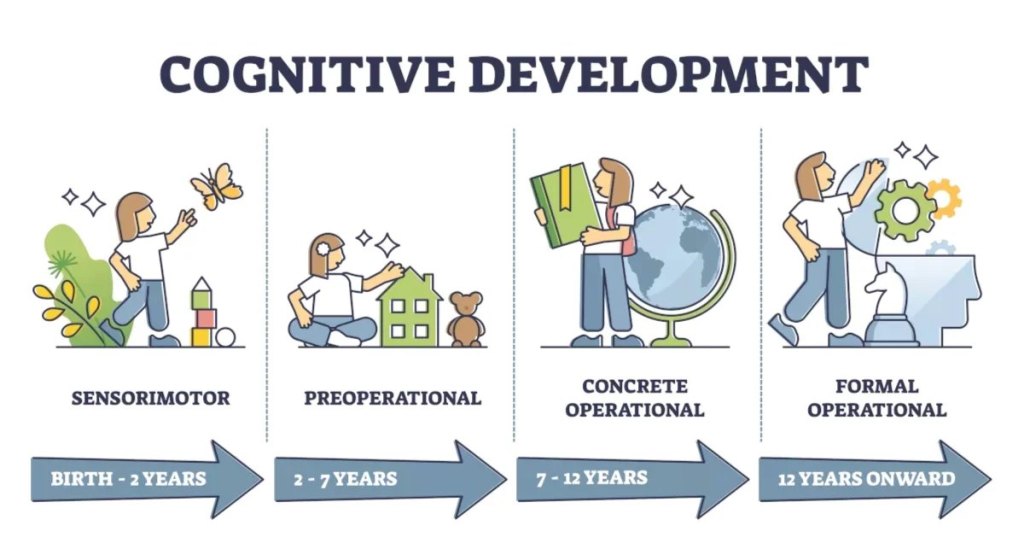
Let’s explore each of the four Piaget stages of development, how they influence thinking, and what implications they hold for therapy.
1. Sensorimotor Stage (Birth to 2 years)
In this stage, infants learn through direct sensory experiences and motor actions. Cognitive development is primarily physical and emotional rather than abstract or logical.
Key Features:
Therapeutic Implications:
While therapy for children in this stage is rare, understanding early developmental disruptions (e.g., neglect, trauma) is essential in trauma-informed care. Adults undergoing Trauma Therapy NYC or Psychodynamic Therapy NYC often revisit these early stages to address unmet emotional needs.
2. Preoperational Stage (2 to 7 years)
This stage is characterized by symbolic play, egocentrism, and a budding sense of imagination. However, logical reasoning is still developing.
Key Features:
In Therapy:
Children in this stage benefit from creative modalities like play therapy. Adults revisiting developmental gaps—often uncovered through Psychodynamic Therapy NYC—may explore how unresolved experiences from this stage influence their present behaviors, especially in Self Esteem Therapy NYC or Anger Management Therapy in NYC.
3. Concrete Operational Stage (7 to 11 years)
Children begin thinking logically about concrete events. They understand concepts like conservation, cause and effect, and can engage in more structured learning.
Key Features:
Clinical Insights:
This stage offers a bridge into cognitive-behavioral work. Adolescents struggling with anxiety or behavioral challenges may respond well to Cognitive Behavioral Therapy NYC. Understanding the Piaget stages helps therapists tailor CBT to the client’s developmental stage.
4. Formal Operational Stage (12 years and up)
This final stage marks the beginning of abstract, hypothetical thinking. Adolescents and adults can consider possibilities, reason logically, and think about the future.
Key Features:
- Abstract thought
- Metacognition
- Hypothetical-deductive reasoning
In Treatment:
At this stage, individuals are ready to engage in deeper therapeutic modalities such as DBT, ACT, and REBT. A DBT Therapist NYC might work on emotional regulation and interpersonal effectiveness with teens just entering this stage. Addiction Therapy NYC may draw upon metacognitive strategies to help adults challenge faulty belief systems.
Connecting Piaget’s Theory to Mental Health Therapy in NYC
Understanding the stages of development Piaget proposed gives therapists a developmental roadmap. Here’s how different therapy services align with cognitive stages:
| Piaget Stage | Recommended Therapy Modalities | NYC Services |
| Sensorimotor | Parent-child therapy, attachment-focused work | Trauma Therapist NYC |
| Preoperational | Play therapy, early CBT, psychodynamic therapy | Therapist for Depression in NYC |
| Concrete Operational | CBT, group therapy, behavior modification | ADHD Specialist NYC, CBT NYC |
| Formal Operational | DBT, ACT, REBT, trauma-focused therapies | Anxiety Therapist NYC, DBT NYC |
Why Cognitive Development Matters in Adult Therapy
Although Piaget stages of development are often associated with children, the core insights apply throughout life. Adults with unresolved trauma or underdeveloped emotional coping mechanisms often operate from earlier cognitive stages. For instance:
- A client with poor emotional regulation may benefit from DBT or ACT, which strengthen skills aligned with formal operational thought.
- Someone with persistent irrational beliefs may find relief through Rational Emotive Behavioral Therapy, a modality best suited to clients capable of abstract, metacognitive reflection.
Relevance in Parenting Therapy and Family Counseling
In family-based sessions or parenting support, therapists use Piaget’s framework to educate caregivers. Understanding where a child is developmentally helps parents adjust expectations and communication strategies. For example:
- Children in the preoperational stage may not fully grasp timeouts or cause and effect.
- Teens in the formal operational stage may struggle with identity development and benefit from Relationship Therapy New York City.
By linking parenting techniques to cognitive development, therapists can foster healthier family dynamics and reduce conflict.
Common Developmental Gaps and Therapy Goals
In clinical practice, we often observe cognitive-emotional mismatches. A client may be intellectually in the formal operational stage but emotionally stuck in preoperational thinking due to trauma. Therapeutic goals, then, include:
- Bridging cognitive-emotional gaps
- Developing metacognitive skills
- Rebuilding trust and autonomy
- Teaching emotion regulation strategies appropriate to their cognitive stage
Incorporating Piaget in NYC-Based Therapy Services
At our NYC-based counseling center, we incorporate Piaget’s stages in the following ways:
- Assessment: Therapists use developmental histories to determine if a client’s psychological functioning aligns with their chronological age.
Goal-Setting: Treatment plans consider which cognitive development strategies best fit the client’s current stage. - Intervention: We align therapy modalities—CBT, ACT, DBT, REBT—with the client’s cognitive and emotional capacities.
Whether working with children, teens, or adults, aligning treatment with the Piaget stages of development leads to more effective, empathetic care.
Honoring Development in the Healing Process
Piaget’s theory of cognitive development continues to shape the way we understand growth—not just in childhood, but throughout life. In fast-paced environments like New York City, where external demands often clash with internal needs, this framework offers valuable insight into how individuals process, adapt, and evolve.
At Uncover Mental Health Counseling, our therapists draw on Piaget’s stages to better understand where clients are developmentally, emotionally, and cognitively. Whether through Cognitive Behavioral Therapy, Psychodynamic Therapy, or DBT, this awareness helps us tailor treatment in a way that fosters deeper healing and more sustainable progress.
Therapy isn’t just about symptom relief—it’s about meeting people where they are and helping them grow. Book an appointment today to start your own process of discovery and transformation.
If you’re looking for a therapist in NYC who tailors treatment to your unique developmental journey, reach out today. We offer specialized care including CBT, DBT, ACT, and trauma-informed therapy—designed with your growth in mind.
FAQ: Piaget Stages and Mental Health Therapy in NYC
What are the Piaget stages of development?
The Piaget stages of development are four sequential stages that describe how children’s thinking and understanding evolve over time. These stages include the Sensorimotor Stage (birth to 2 years), Preoperational Stage (2–7 years), Concrete Operational Stage (7–11 years), and Formal Operational Stage (12 years and up). Each stage reflects key changes in cognitive development, including how children perceive the world, process information, and solve problems.
Can adults benefit from understanding Piaget stages?
Absolutely. Although Piaget’s theory was developed to understand childhood development, many adults experience emotional or psychological disruptions that reflect unresolved issues from earlier stages. Therapists—such as a Trauma Therapist NYC or Self Esteem Therapy NYC provider—may use this framework to help adults identify and address lingering developmental needs, especially those rooted in early childhood experiences.
How does knowledge of Piaget’s stages help therapists in NYC?
Therapists across NYC use Piaget stages to guide treatment planning. For example, a Cognitive Behavioral Therapy NYC provider might consider whether a client has the cognitive maturity to engage in logical self-reflection. Similarly, a DBT Therapist NYC will tailor emotional regulation strategies depending on the client’s ability to think abstractly and manage complex emotions.
Is Piaget’s theory still relevant to therapy today?
Yes, despite being developed decades ago, Piaget’s theory remains foundational in both education and psychology. Modern therapy in NYC—including Psychodynamic Therapy, Acceptance and Commitment Therapy, and Rational Emotive Behavioral Therapy—still draws on the understanding of cognitive development to create age- and stage-appropriate interventions.
How can I tell if I’m “stuck” in an earlier stage of development?
Signs may include struggling with emotional regulation, rigid thinking, black-and-white views of the world, or difficulty empathizing with others. These challenges may emerge during therapy as signs of arrested development. A qualified Therapist for Depression in NYC or Anxiety Therapist NYC can help assess your developmental patterns and provide targeted strategies to promote growth and healing.
What types of therapy in NYC are best suited for different developmental stages?
- For early developmental gaps: Psychodynamic Therapy NYC or Prolonged Exposure Therapy may help address childhood trauma.
For concrete thinkers: CBT and Behavioral Therapy offer structure and skill-building. - For abstract thinkers: ACT, DBT, and REBT provide tools for advanced emotional and cognitive regulation.
Your therapist will tailor the approach based on your unique needs and current developmental level.
Can understanding Piaget stages improve my parenting or relationships?
Yes, knowledge of Piaget stages is incredibly helpful for navigating relationships and parenting. In Relationship Therapy New York City, therapists often teach clients how to recognize and respond to their partner’s or child’s developmental level. This fosters more empathy, better communication, and healthier emotional bonds.
Do ADHD or learning differences impact a person’s developmental stage?
They can. While ADHD doesn’t necessarily delay intellectual development, it may affect executive functioning and emotional regulation, which are often associated with specific stages in Piaget’s model. An ADHD Specialist NYC may use this knowledge to adjust expectations, modify treatment goals, and offer practical interventions for managing symptoms.
What’s the best way to get started with therapy in NYC if I’m unsure of my needs?
Start with a consultation. During your first session, your therapist will explore your history, cognitive patterns, emotional challenges, and life goals. From there, they’ll determine whether Cognitive Behavioral Therapy NYC, DBT, ACT, or another modality is the best fit for you. Our NYC-based clinicians are trained to meet you exactly where you are—developmentally, emotionally, and cognitively.
Is it ever too late to work through earlier developmental stages?
Never. Human growth is lifelong. Many clients come to therapy in adulthood to address needs that weren’t met in childhood. Whether it’s learning how to trust others, developing self-worth, or gaining emotional regulation skills, therapy can help. A skilled Therapist in NYC will support you through this process, using techniques informed by Piaget stages of development and the latest evidence-based practices.