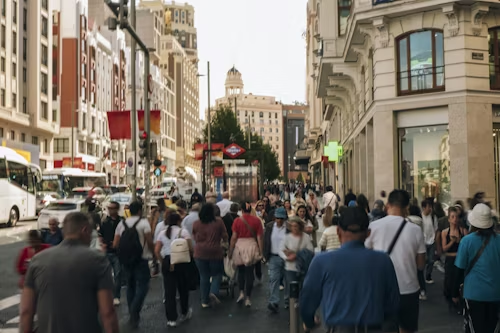
In the calm streets of the West Village, where sunlight filters through tree-lined blocks and the air carries the faint scent of espresso and ambition, rest should feel easy. Yet for many Manhattan professionals, even peaceful surroundings can’t quiet the inner hum of restlessness.
You might find yourself in a serene apartment, weekend brunch planned, candles lit — and still, your mind is racing. You’re checking emails “just in case,” mentally writing to-do lists, or feeling guilty for not doing more.
This paradox — feeling restless even when life finally slows down — is a common experience among high-achieving New Yorkers. It’s what happens when drive turns into overdrive and success becomes tied to constant motion.
Therapy for burnout recovery in NYC often begins with this exact question: “Why can’t I just relax?”
The Invisible Pressure Behind Success

Living in Manhattan means living among success — and pressure. The culture here rewards motion, visibility, and productivity. Whether you’re a creative building your portfolio in SoHo or an executive managing a demanding schedule downtown, there’s an unspoken belief that slowing down equals falling behind.
Even leisure becomes performative: the right workout class, the perfect weekend getaway, the curated “self-care” routine. Stillness feels indulgent, even dangerous.
But beneath the busy exterior, many professionals quietly wrestle with exhaustion, emotional disconnection, and a persistent sense that they can’t ever fully stop. This isn’t just stress — it’s a form of burnout, often masked by high-functioning behavior.
At Uncover Mental Health Counseling, we often see this in clients who describe themselves as “fine” — yet underneath, they feel anxious, irritable, or emotionally numb.
When Rest Feels Unsafe
If you’ve built your identity around being dependable, productive, and high-achieving, rest can feel uncomfortable — even unsafe. You may wonder:
- What if I lose my edge?
- What if people stop relying on me?
- What if slowing down makes me feel emotions I’ve been avoiding?
For many, the inability to rest isn’t about laziness or lack of discipline. It’s rooted in fear and identity. Somewhere along the way, achievement became tied to self-worth — and without achievement, there’s uncertainty about who you are.
This internal tension can fuel anxiety, stress, and even depression, creating a cycle where restlessness feeds burnout, and burnout reinforces the need to “do more.”
The Cost of Constant Motion
It’s easy to overlook burnout when your life looks successful from the outside. Yet chronic busyness often masks deeper emotional fatigue.
Unchecked burnout can lead to:
- Difficulty focusing or making decisions
- Emotional detachment from loved ones
- Irritability or bursts of anger
- Sleep disruption or physical exhaustion
- Feelings of emptiness despite success
Burnout isn’t just mental fatigue — it’s an emotional depletion that disconnects you from joy, curiosity, and creativity.
Recovering from burnout isn’t about quitting your career or moving upstate. It’s about reconnecting to your emotional rhythm — learning how to feel safe in stillness again.
Uncover Mental Health Counseling
At Uncover Mental Health Counseling, we help high-achieving professionals and creatives across Manhattan reclaim balance and meaning in their lives.
Through virtual therapy, we make it possible to receive compassionate, individualized support without disrupting your packed schedule. Whether you’re in Greenwich Village, the West Village, or another corner of New York State, you can connect with a licensed therapist who understands your world.
Our therapists specialize in burnout recovery, stress management, relationship issues, self-esteem, and trauma, using evidence-based approaches such as:
- Cognitive Behavioral Therapy (CBT)
- Acceptance and Commitment Therapy (ACT)
- Dialectical Behavior Therapy (DBT)
- Psychodynamic Therapy
Each approach is personalized — helping you understand not just what’s happening, but why it’s happening.
Learning to Rest Without Guilt
True rest isn’t simply about stopping. It’s about feeling safe enough to stop.
In therapy, we often explore how early experiences or professional environments shape our relationship with rest. For example, if you learned that worth comes from productivity, then relaxation can feel like failure. If you associate stillness with loss of control, slowing down can trigger anxiety.
Burnout recovery involves retraining your nervous system to recognize rest as nourishing, not threatening.
Through therapy, you can:
- Learn to notice when your body is in “go mode” even at rest
- Practice mindful techniques that reconnect you to calm
- Address the perfectionism or fear driving your exhaustion
- Redefine success beyond constant output
- Rebuild boundaries between work and personal life
When you begin to rest from a place of self-compassion rather than permission, rest transforms from avoidance into healing.
Burnout Recovery in Manhattan’s Calm Corners
There’s something deeply symbolic about burnout recovery in the West Village or Greenwich Village — neighborhoods where old-world charm meets modern ambition. The cobblestone streets and slower pace remind us that life doesn’t always need to move at full speed to have meaning.
You might find that even taking a mindful walk, without your phone or agenda, can start to shift your relationship with stillness. Therapy amplifies that process — offering a space to pause internally, to reflect, and to understand your emotional patterns without judgment.
Over time, you’ll find that rest no longer feels like an interruption, but a reunion — a return to yourself.
Therapy as a Bridge to Balance
For many high-achieving New Yorkers, burnout recovery begins with therapy not because something is “wrong,” but because something feels missing. Therapy helps bridge the gap between external success and internal fulfillment.
At Uncover Mental Health Counseling, our virtual sessions are designed for your pace and lifestyle. Whether you’re logging in between meetings or unwinding at home, our goal is to help you reconnect to your calm — the kind that doesn’t depend on circumstances.
Therapy gives you permission to rest without guilt, clarity without control, and self-acceptance without achievement.
Because real strength isn’t in constant motion — it’s in knowing when to pause.
Book an Appointment
If you’ve built a beautiful life but still struggle to slow down, you’re not alone — and you don’t have to push through alone.
At Uncover Mental Health Counseling, we specialize in helping Manhattan professionals, parents, and creatives recover from burnout and rediscover what rest truly feels like.
Our virtual therapy model makes it easy to prioritize your well-being — no commute, no waiting rooms, just compassionate support wherever you are.
Book an appointment today and start your path toward balance, clarity, and genuine calm.
Because rest isn’t the opposite of ambition — it’s what keeps it alive.
FAQ: Burnout Recovery in NYC
1. How do I know if I’m experiencing burnout?
If you feel physically or emotionally drained despite sleeping or taking breaks — or if work feels meaningless or overwhelming — you may be experiencing burnout.
2. Can therapy really help me recover from burnout?
Absolutely. Therapy provides tools to manage stress, identify emotional patterns, and create sustainable balance. It helps you reconnect with your values and redefine success on your terms.
3. What if I’m too busy for therapy?
That’s exactly why Uncover Mental Health Counseling offers virtual therapy. You can access support from anywhere — at home, in the office, or on the go.
4. Which therapy approach works best for burnout?
We often use CBT, ACT, and DBT to address burnout, alongside Psychodynamic Therapy for deeper emotional insight. Your therapist will tailor sessions to your specific needs.
5. Is therapy confidential?
Yes. Our virtual sessions are private and secure, ensuring a safe space for honest reflection.