Life on the Upper East Side marches to a unique beat. Characterized by its tree-lined streets, high-end shopping, prestigious private schools, and well-managed daily lives, this area presents a picture of grace and ambition. It is a location where one can witness success, order, and achievements. However, for many affluent professionals, parents, and artists who reside in the UES, this sophisticated lifestyle brings along a hidden emotional aspect: guilt.
The guilt, in fact, that one experiences when they attempt to relax, rest, or do anything apart from being productive. Living in the UES means being constantly exposed to top level qualities. Parents keep up with children’s school schedules that can sometimes be quite demanding, executives have to manage work continuingly, and artists have to meet the requirements of their changing industries. Even going out for fun is not free from pressures of performance.
Your exercise, your travel, your self-care and even your rest, if not kept in check, can be optimized, organized, and evaluated. The paradox is that while slowing down is supposed to make us feel relaxed, for many it is the opposite. Sometimes it even seems like it is forbidden. Recognizing this emotional struggle helps in paving the way for an improved connection with rest, self-care, and your inner self.
The UES Pace: Luxury, Pressure, and the Silent Expectation to Keep Going
The Upper East Side is a place that is often linked with being wealthy and living a luxurious life. However, the reality is that numerous individuals residing there put in a tremendous amount of effort to be able to afford such a lifestyle. They may live in big buildings, have nannies for their children, use products from famous designers, and have very busy careers.
All these things combined may create a life that appears to be flaw-free from the outside, but on the inside many people are running on empty. Trying to keep up a particular level of living can lead to having long-term stress, ongoing worry, and experiencing burnout again and again. It is also the reason why many people living in the UES have a hard time finding peace even though they want it very much. When your surroundings are encouraging overachievement, it can seem that taking it easy is the same as being left behind.
People come to us and tell us stories like:
- Feeling guilty taking a day off work
- Resting but mentally rehearsing a to-do list
- Struggling to enjoy family time because of work pressure
- Feeling like every minute must be maximized
- Being unable to disconnect from email or Slack
- Feeling emotionally stuck despite material comfort
Many times, these patterns cause individuals to look for help with their anxiety, stress, or problems with others. Additionally, some try to understand how more profound elements such as their sense of worth, past traumas, or ADHD affect their constant urge to keep moving.
Why High-Achieving Professionals Feel Guilty Slowing Down
1. You learned early that achievement equals worth
Success isn’t just a job title for UES folks. It is who they’re. When worth ties to output, slowing down feels like surrendering value. Psychodynamic Therapy, CBT, ACT, these tools let you dig into old habits and change them.
2. Perfectionism is normalized in your social circles
Everyone else is pushing hard. You start wondering if you’re going too far. Rest sounds like giving others an edge. That’s tied to perfectionism, overthinking, stress.
3. Your lifestyle requires continuous effort
Luxury works well but costs a lot. Money pressure makes rest seem dangerous. Even with high income, duties pile up fast.
4. You are used to being needed
Parents handle school demands Caregivers manage homes. Executives run teams. They often feel bad about stepping back or handing things off.
5. Stillness brings up thoughts you avoid
Staying busy keeps people occupied. Slowing down forces faced with hidden pain – fear, sadness, old trauma. DBT, REBT, Prolonged Exposure Therapy help walk through that safely.
What Slowing Down Actually Gives You
Even though many Upper East Side professionals feel guilty for it, slowing down definitely isn’t a luxury. Rather, it is a necessary factor for emotional and physical health.
Taking a slower pace can:
- Improve cognitive clarity
- Reduce emotional reactivity
- Strengthen relationships
- Support emotional regulation
- Increase creativity
- Improve sleep and energy
- Prevent burnout
- Support long-term career performance
When your nervous system finally gets space to breathe, you can show up in your life with more intention, presence, and self-awareness.
A Quick UES-Friendly Mindfulness Exercise
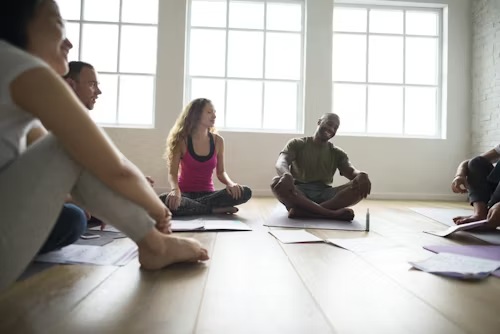
This can be used on a long elevator ride, while waiting for a rideshare, or during a quiet moment before a meeting.
- Close your eyes for five seconds.
- Inhale slowly through your nose for four seconds.
- Hold for two seconds.
- Exhale through your mouth for six seconds.
- Repeat for three to five rounds.
- Notice one physical sensation that feels grounded.
- Say silently: “It is safe to slow down.”
This breath pattern helps reduce anxiety, lowers stress levels, and interrupts overthinking.
Uncover Mental Health Counseling
Uncover Mental Health Counseling provides virtual therapy for high-achieving UES professionals, parents, and creatives who want support without disrupting their demanding routines. Online sessions make therapy accessible, discreet, and flexible for clients with packed schedules, long commutes, travel, or unpredictable workdays.
Whether you are navigating stress, anxiety, perfectionism, relationshiptension, anger, addiction behaviors, ADHD, low self-esteem, or trauma, Uncover Mental Health Counseling offers evidence-based approaches such as CBT, DBT, ACT, Psychodynamic Therapy, REBT, and Prolonged Exposure Therapy.
The thing is, virtual therapy works when you’re juggling a packed day. You can join from home, a quiet office, or even your parked car. It fits into your routine instead of forcing you to adjust. No need to leave the house. The session stays private and grounded. Therapy follows your schedule, not the other way around.
Book an Appointment
If you are a high-achieving professional, parent, or creative in Manhattan and you are ready to create more mental space, ease the constant pressure to perform, and build a healthier relationship with rest, therapy can help you slow down and reconnect with what you truly need. Uncover Mental Health Counseling offers confidential and flexible virtual therapy anywhere in New York State, designed for people with full schedules, high expectations, and complex emotional lives. Book an appointment today and begin creating a grounded, supportive space for yourself to grow, heal, and move through life with greater clarity and ease.
Frequently Asked Questions
Why do UES professionals find it so hard to slow down?
Many residents live in high-pressure environments that reward productivity. The culture of achievement, competition, and perfectionism makes rest feel uncomfortable or unearned.
Is slowing down a sign of weakness?
Not at all. Slowing down is a healthy emotional reset that strengthens clarity, creativity, and resilience.
Can therapy help with guilt around rest?
Yes. Therapy can help you understand the roots of guilt, reshape automatic beliefs, and build healthier patterns so rest no longer feels threatening.
What if I do not have time for therapy?
Virtual therapy makes it easier. Most UES clients appreciate that online sessions fit seamlessly into demanding routines, allowing them to receive support without sacrificing time for commuting.
Which therapy approaches help with burnout and overachievement?
CBT, ACT, Psychodynamic Therapy, DBT, and REBT are often effective for navigating perfectionism, stress, anxiety, and emotional exhaustion.