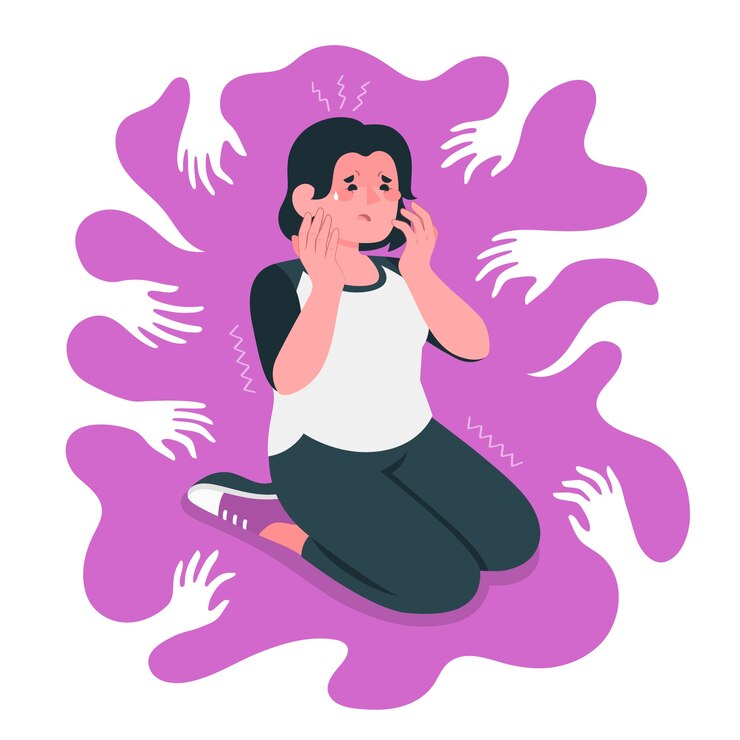
Dating anxiety on apps is a predictable response to how dating apps work, not a sign that you’re bad at dating or too picky. Choice overload, constant small rejections, and engagement-driven design wear people down. Setting limits and taking breaks often helps. If the dread continues, therapy can address what’s underneath.
By Kristie Tse, LMHC-D, founder of Uncover Mental Health Counseling
Most people who feel dread opening a dating app aren’t bad at dating, too picky, or more anxious than everyone else swiping casually. In my work with adults across New York State, I see something closer to a predictable response to a specific, well-studied set of psychological pressures, ones that dating apps are built around, whether or not that was the explicit intention.
Dating apps are widely used: about 3 in 10 U.S. adults have used a dating site or app, and about half of adults under 30. So if dating app burnout feels familiar, you’re in large company.
What is dating anxiety?
Dating anxiety is worry, dread, or self-doubt that comes up before, during, or after dating: nerves before a first date, fear of rejection, or avoiding dating altogether. It is not a formal diagnosis. When the dread is tied to dating apps specifically, people often call it dating app burnout or dating app fatigue: feeling drained, discouraged, or dreading the app even when nothing “bad” has happened.
Why does the paradox of choice make dating harder?
The mechanism most responsible has a name from behavioral economics. Psychologist Barry Schwartz’s work on the paradox of choice and the classic Iyengar and Lepper (2000) study on choice overload found that too many options can lead to decision paralysis and less satisfaction with the choice you make.
That runs against the intuition that more options should make dating easier. With an effectively endless pool, every choice carries a quiet question: is someone better one swipe away? That makes it harder to feel settled with anyone, even a good match. This is a documented cognitive bias that affects nearly everyone, not a personal failing or indecisiveness.
Why does swiping feel exhausting even when nothing bad happens?
Decision fatigue stacks on top of choice overload. Each profile needs a quick evaluation of attraction, compatibility, and potential, repeated dozens or hundreds of times in one sitting. The brain’s capacity for that kind of judgment is limited, so you end up deciding from a depleted state. That’s why a swiping session can feel draining with no rejection, no bad date, and no obvious cause.
Are dating apps designed to keep you swiping?
Partly, yes. Apps are built to maximize engagement, and some of their features borrow from the same reward patterns found in gambling and social media. Research on online dating by Finkel and colleagues (2012) examines how app formats shape the way people choose partners. And, as Psychreg notes, features like time-limited matches, super likes, and profile boosts create artificial urgency. Users can develop fear-of-missing-out (FOMO)-driven engagement, where worry about missing a connection overrides considered decision-making.
This reframes the exhaustion as a reasonable response to an intermittent reward structure: an occasional unpredictable payoff, like a great match, inside a much larger volume of routine disappointment. It also explains why so many people compulsively check an app they dread opening.
What does the research say about dating apps and mental health?
A study in Cyberpsychology, Behavior, and Social Networking, reported by Forbes, found that heavier dating app use was linked with higher anxiety, depressive symptoms, and lower self-esteem. Correlation isn’t cause: people who already feel low may use apps more. But the pattern matches what I see: the dread is common and understandable.
Social comparison plays a part too. Every profile shows someone’s most flattering photos and best self-description, and seeing dozens in a row makes a comparison environment more distorted than meeting people through daily life.
Why does dating app dread hit hard in New York?
New York has one of the largest dating app markets in the country, which cuts both ways. There really are more potential matches here, and that volume intensifies the paradox of choice, since “someone better” feels more plausible in a city this size.
Among high-achieving clients, I often see the same optimization mindset that works at the office applied to dating, as a project to solve efficiently. It tends to backfire, because dating involves uncertainty and rejection and doesn’t give efficient, predictable returns. For many clients, dating here has started to feel like an unpaid second job with a poor return on time.
It can also compound for clients navigating immigrant or first-generation family expectations about dating and marriage timelines, including many in Asian American communities. App-based dating can feel foreign next to how earlier generations met partners, which adds cultural strain to the ordinary exhaustion.
Why does rejection feel sharper on apps?
App rejection is often silent: an unanswered message, a match that disappears, a conversation that stops. Traditional rejection at least came with information and closure. Ambiguity is its own stressor, because the mind fills a silent gap with worse explanations than reality usually offers.
It also comes in volume. One evening of swiping and messaging can produce more small, unresolved rejections than months of dating through friends or work once did. Your nervous system doesn’t always separate many small ambiguous rejections from one big clear one. It can register them as cumulative.
Is dating app anxiety different for men and women?
It can look different. Men on these platforms often compete for attention in a more crowded, less responsive environment, which can produce its own rejection sensitivity and self-doubt, usually without much cultural permission to call it hard. Women often describe different pressures, including safety concerns and the volume of unwanted messages. This isn’t a contest over who has it worse. Dating app anxiety isn’t one uniform experience. [Note: I removed the 15.5% / 8.7% statistics because the cited page does not contain them.]
What helps with dating app burnout?
A few adjustments make a real difference without quitting apps altogether:
- Limit your use. Pick a set time window instead of checking all day. It cuts the compulsive-checking pattern.
- Keep fewer conversations going. Juggling many chats recreates swiping’s decision fatigue. Two or three at a time feels more sustainable and more genuine.
- Name the design. Understanding that some of the pull and exhaustion comes from how apps work, not from a flaw in you, reduces the shame that adds to the fatigue.
- Take planned breaks. Stepping away for a week or a month is a reasonable response to burnout, not giving up. Many people find that coming back with intention feels very different from pushing through.
When should you see a therapist about dating anxiety?
For most people, dating app dread is a rational response to a taxing system, and the steps above are enough. For some, the anxiety runs deeper than the apps: rejection sensitivity, self-worth tied to romantic validation, or avoiding dating altogether in a way that predates any app.
Consider therapy if the dread continues even after real breaks, if it’s tangled up with hopelessness about relationships, or if it affects your sleep, work, or friendships. A longer break or a different app is unlikely to resolve those on its own. If you ever feel unsafe or have thoughts of harming yourself, call or text 988 or go to your nearest emergency room.
Dating anxiety therapy in NYC
If dating in this city has started to feel like dread instead of possibility, that reaction makes sense given how these platforms work, and it deserves attention instead of the assumption that you’re bad at this.
At Uncover Mental Health Counseling, therapy is virtual and available to adults anywhere in New York State, including Manhattan, Brooklyn, Queens, the Bronx, and Staten Island. We work with dating anxiety, rejection sensitivity, and relationship patterns for high-achieving adults. Kristie offers sessions in English and Mandarin.
Uncover is a private-pay, out-of-network practice. Call (646) 941-8333.
About the author Kristie Tse, LMHC-D, is the founder of Uncover Mental Health Counseling, a virtual private-pay therapy practice serving New York State. She works primarily with high-achieving adults navigating anxiety, relationship patterns, and identity, including Asian American and immigrant communities, LGBTQ+ individuals, and first-generation Americans. Her clinical background includes a specialization in gender, sexuality, and identity development. Kristie is fluent in English, Cantonese, and Mandarin, and her commentary has appeared in HuffPost, Verywell Mind, Well+Good, and Bustle. NYS license