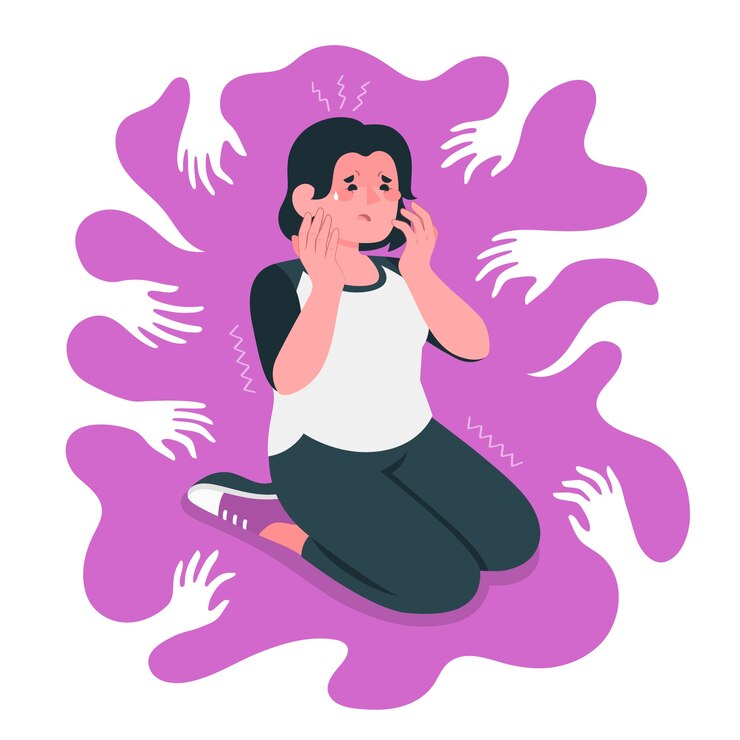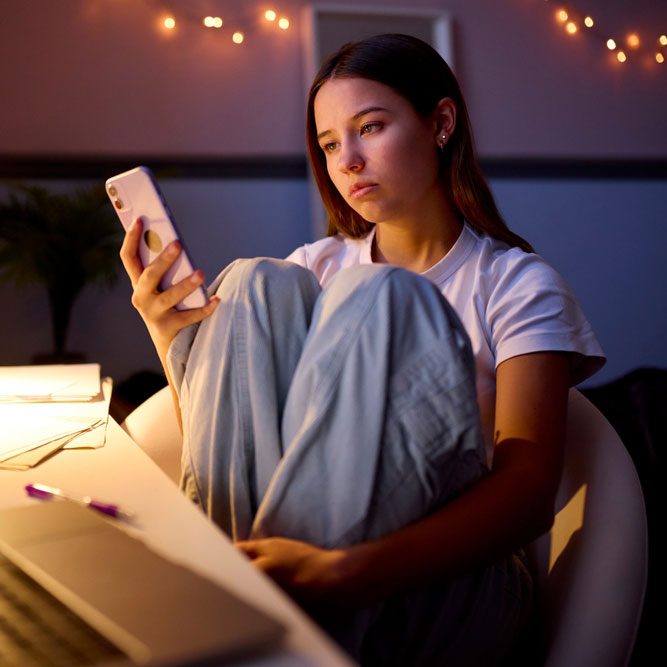
It is 2am. You have been awake for an hour, or two, or you never quite fell asleep at all. Your mind is running through tomorrow’s meeting, or something you said last week, or the thing you forgot, or the thing that is coming that you cannot control. The thoughts are not new. You have thought most of them before. But there is something about 2am that makes them feel more certain, more permanent, more true.
You are not alone, and you are not broken. Night anxiety, or anxiety at night, is one of the most common presentations of anxiety, particularly in high-achieving adults, and the reason it gets worse at night is not mysterious. It is the predictable result of how the brain manages anxiety during the day and what happens when the day’s defenses are removed.
This post explains why night anxiety happens, what makes it worse, and what actually helps, including when the problem is significant enough to address with clinical support.
Why Does Anxiety Get Worse at Night?
The short version: daytime anxiety has places to go. The tasks, the conversations, the meetings, the demands of the professional and personal life: these absorb the anxious mind’s energy and provide structure that functions as a form of anxiety management. When the day ends and the structure disappears, the anxiety that was being managed by busyness has nowhere to go except up.
The default mode network activates. During focused daytime activity, the brain’s task-positive network is engaged. When you stop doing things, the default mode network, associated with self-referential thought, rumination, and mind-wandering, becomes more active. For anxious brains, the default mode network tends to generate the kind of recursive, worry-based thinking that keeps people awake.
The distractions are gone. Research on rumination consistently documents that people who suppress anxiety-related thoughts during the day experience a rebound effect when the suppression is no longer active. The thought that was pushed aside in the meeting returns at night with more force. The suppression was not processing. It was postponing.
Cortisol patterns interact with anxiety. Cortisol, the stress hormone, follows a diurnal pattern: it peaks in the early morning and declines through the day. For people with anxiety, this pattern is often disrupted, with cortisol elevation in the evening that should have declined, which keeps the nervous system in a state of activation that makes sleep difficult.
The dark amplifies threat assessment. There is a reason humans evolved to feel less safe at night. Without visual information about the environment, the threat detection system, the amygdala, runs on a higher sensitivity setting. Concerns that feel manageable in daylight feel more certain and more threatening in the dark.
Hyperarousal is already present in anxious nervous systems. For people with significant anxiety, the nervous system is already running above its baseline activation level. What tips an anxious nervous system into wakefulness at 2am may be a much smaller trigger than what would wake a less anxious person. The threshold for activation is lower, which means the normal mid-sleep arousal that everyone experiences becomes a waking episode.
What Makes Anxiety at Night Worse.
Understanding the specific patterns that maintain night anxiety helps identify where the most effective interventions can be applied.
Checking the phone. The light from screens suppresses melatonin production and signals to the brain that it is time to be alert. The content of the phone, email, news, social media, provides fresh material for the anxious mind to process. Checking the phone at 2am is one of the most reliably counterproductive responses to wakefulness.
Watching the clock. The awareness of how long you have been awake, how many hours until you need to wake up, and how tired you are going to be: this metacognitive monitoring of the insomnia is a form of threat assessment that increases arousal rather than reducing it. The clock is making the anxiety worse.
Trying hard to fall asleep. Sleep is not a behavior that responds to effort. Trying to sleep activates the same performance anxiety that produces difficulty sleeping in the first place. The paradox of insomnia is that the effort to sleep produces the opposite of sleep.
Lying in bed awake for extended periods. The longer a person lies in bed awake, the more the brain begins to associate the bed with wakefulness and anxiety rather than with sleep. This conditioned arousal is one of the primary mechanisms of chronic insomnia and it is maintained by extended time in bed while awake.
Running through tomorrow’s demands. The anxious mind’s attempt to prepare for tomorrow by mentally reviewing it is experienced as productive but produces the opposite of preparation: increased arousal, no actual problem-solving, and the subjective experience of having spent the night rehearsing threats.
Evidence-Based Approaches that Helps Night Anxiety
Stimulus control. Using the bed only for sleep and sex, getting out of bed when awake for more than 20 minutes, and returning only when sleepy. This approach, derived from CBT for insomnia, reconditions the association between bed and sleep rather than allowing the conditioned arousal to deepen.
Scheduled worry time. Setting a specific, bounded period during the day, not in the evening or near bedtime, to attend to the worries that tend to surface at night. The practice of postponing worry to a designated time reduces the midnight rehearsal because the brain has learned that the concerns will receive attention, just not now. This works better than it sounds.
Progressive muscle relaxation. Deliberately tensing and releasing muscle groups throughout the body produces physiological relaxation that reduces the arousal that is maintaining wakefulness. It also provides something to focus on that is not the anxious thoughts.
Breathing techniques. Extending the exhale relative to the inhale activates the parasympathetic nervous system. The 4-7-8 technique (inhale for 4 counts, hold for 7, exhale for 8) is specifically designed to reduce arousal. The physiological mechanism is real regardless of the technique’s presentation.
Cognitive defusion. Rather than arguing with the anxious thoughts or trying to suppress them, treating them as thoughts rather than facts. “I notice I am having the thought that tomorrow will go badly” is a different relationship to the thought than “tomorrow will go badly.” The defusion practice reduces the urgency and threat quality of the thought without requiring it to be resolved.
Writing it down. Externalizing the anxious thoughts by writing them down, particularly to-do lists and worries, reduces the cognitive load of holding them in working memory. The act of writing signals to the brain that the item has been captured and does not need to be actively monitored.
Consistent wake time. The Sleep Foundation documents that a consistent wake time is one of the most effective behavioral interventions for sleep disruption. The consistent wake time builds homeostatic sleep pressure and synchronizes the circadian rhythm. Sleeping in after a poor night, while intuitively appealing, disrupts the rhythm and makes the following night worse.
When Night Anxiety Is a Sign of Something Bigger
Anxiety at night that is persistent and significantly affecting daytime functioning is often a symptom of an underlying anxiety disorder or depression that deserves direct clinical attention rather than only behavioral management.
The 2am wake-up is a classic depression symptom. Early morning wakening, typically defined as waking significantly before the intended wake time and being unable to return to sleep, is a well-documented symptom of depression. The 2am wake-up with a mind that will not stop is often not primarily an insomnia problem. It is an anxiety or depression problem that is expressing itself through sleep disruption.
Rumination at night is a feature of both anxiety and depression. The repetitive, unproductive cycling through worries and regrets that characterizes night anxiety is clinically associated with both generalized anxiety disorder and depression. Treating the sleep disruption without addressing the underlying condition produces limited and temporary results.
Night anxiety that has been present for months without improvement. Behavioral strategies for sleep and anxiety management help many people. When they do not produce improvement after consistent application, the underlying anxiety may require clinical treatment rather than continued self-management.
Night Anxiety in New York City
As Kristie Tse, LMHC-D, describes it: “The night anxiety pattern I see most often in New York is the high achiever who is managing everything well during the day and then cannot turn their brain off at night. The day’s busyness has been doing the work of anxiety management, and when the day ends, the anxiety that was being outrun catches up.”
New York City’s specific features interact with night anxiety in ways worth naming.
The city’s pace removes the natural wind-down. In environments with more natural deceleration, evenings gradually slow toward sleep. In New York, where evening activities, social obligations, and work demands extend later than in most cities, the transition from full activation to sleep is abrupt rather than gradual. The nervous system does not have time to decelerate.
The cost of a poor night’s sleep is higher here. In a demanding professional environment where performance is high-stakes and continuous, the anxiety about sleep deprivation’s effects on tomorrow’s performance is itself anxiety-producing. The night anxiety generates daytime performance anxiety, which generates night anxiety.
The density produces noise. New York City is loud at night in ways that most cities are not. The ambient noise, the traffic, the density of people, creates a sensory environment that is mildly activating even when it is familiar, and that does not provide the auditory quietude that supports the shift from wakefulness to sleep.
When to Seek Clinical Support for Night Anxiety
Consider reaching out to a therapist when:
- Night anxiety has been present most nights for more than a few weeks
- You are consistently getting significantly less sleep than you need
- The sleep deprivation is affecting your daytime functioning, mood, or professional performance
- The behavioral strategies described in this post have not produced improvement
- The night anxiety is accompanied by significant daytime anxiety, low mood, or other symptoms
- The 2am wake-up pattern is accompanied by a pervasive low mood or hopelessness
Evidence-based treatment for anxiety, including CBT, somatic approaches, and where appropriate medication evaluation, addresses the anxiety that is producing the sleep disruption rather than only the sleep disruption itself. CBT for insomnia specifically (CBT-I) has a strong evidence base for sleep disruption and can be integrated with broader anxiety treatment.
Frequently Asked Questions about Night Anxiety
Why is anxiety at night worse than during the day?
Because the day provides structure and activity that manages the anxious mind’s energy. When the structure disappears at night, the anxiety that was being managed by busyness has nowhere to go. The nighttime mind is not more anxious than the daytime mind. It is more able to be heard.
Is it better to get out of bed or stay in bed when I cannot sleep?
The evidence-based answer from CBT for insomnia is to get out of bed after approximately 20 minutes of wakefulness and return only when sleepy. Lying in bed awake for extended periods reinforces the association between bed and wakefulness. Getting up temporarily maintains the association between bed and sleep.
Can medication help with night anxiety?
Yes. Short-term sleep aids can reduce acute sleep disruption, though they do not address the underlying anxiety. Medications that address the anxiety itself, including SSRIs and SNRIs, often improve sleep as a secondary effect when prescribed for anxiety or depression. Consult a psychiatrist or primary care physician for medication evaluation specific to your situation.
Why does the same worry feel more catastrophic at night?
Several factors: reduced prefrontal cortex activity in the low-light environment makes rational perspective-taking harder, the amygdala runs at higher sensitivity without visual environmental information, and fatigue reduces cognitive flexibility. The worry is not more accurate at 2am. It is processed by a less equipped cognitive apparatus.
I have tried everything and nothing helps. What should I do?
If you have tried the behavioral strategies in this post consistently and night anxiety is persisting and affecting your functioning, the underlying anxiety or depression likely requires clinical treatment. A therapist who specializes in anxiety and integrates CBT-I with broader anxiety treatment will be more helpful than continued self-management.
Ready to Address What Is Behind the 2am Wake-Up?
Night anxiety is not just a sleep problem. It is an anxiety problem that surfaces at night when the day’s defenses are down. Addressing it means addressing the anxiety itself, not only the sleep disruption it produces.
Uncover Mental Health Counseling offers virtual anxiety therapy across New York State for high-achieving adults who experience anxiety at night and can’t turn their brain off even once the day is done.
Book a free consultation to cope with night anxiety.
About the Author
Kristie Tse, LMHC-D (NY License #009672) is the founder of Uncover Mental Health Counseling, a virtual private pay practice in New York State. She specializes in attachment, relationships, anxiety, and identity with high-achieving adults, and has a particular focus on Asian American adults, LGBTQ+ individuals, and first-generation Americans. Her work has been featured in HuffPost, Verywell Mind, Well+Good, and Bustle.