By Kristie Tse, LMHC-D (NY License #009672)
Most of what gets written about attachment styles in relationships focuses on the anxious partner chasing and the avoidant partner pulling away. An avoidant-avoidant relationship looks nothing like that, and it is often mistaken for the healthiest pairing in the room. As a licensed therapist (LMHC-D) working virtually with individuals and couples across New York State, I have sat with more than a few couples who describe their relationship as remarkably easy, low-drama, and calm, only to eventually admit that they also feel strangely distant from someone they have lived with for years. That gap between “easy” and “close” is usually the first sign of an avoidant-avoidant dynamic.
What an Avoidant-Avoidant Relationship Actually Looks Like
When both partners have an avoidant attachment style, the relationship tends to run on an unspoken agreement: neither person will ask too much of the other, emotionally or otherwise. In two-dismissive relationships there is minimal conflict, but also minimal growth, since avoidant partners miss the opportunities that come from hashing out differences and learning more about each other’s inner worlds. From the outside, and often from the inside too, this can look like an unusually mature, drama-free partnership. Two people who do not fight, do not cling, and give each other plenty of space.
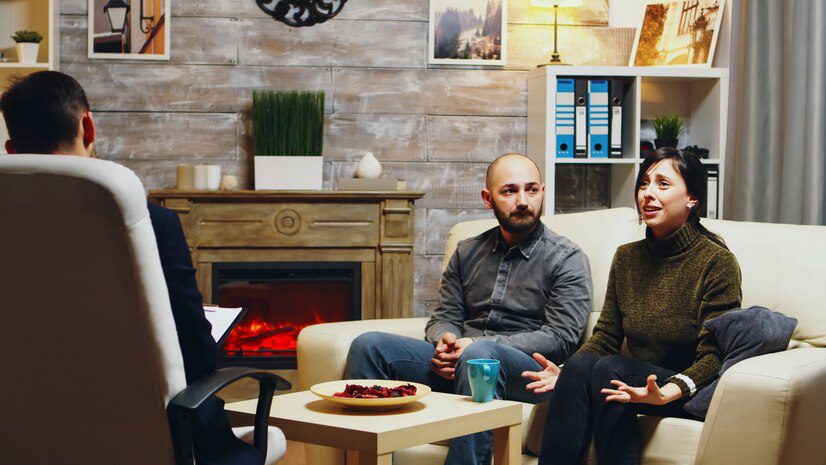
The trouble is what that space is actually made of. (Illustrative composite, not a specific client account.) I think of a couple I’ve worked with, both in their late thirties, who had been together for nearly a decade and had never had what either of them would call a real fight. They described their relationship as peaceful. What emerged in session was that this peace had been purchased by both of them quietly withholding almost everything difficult: disappointments, unmet needs, moments of loneliness within the relationship, even significant life decisions that one partner had made without fully discussing with the other. Neither one experienced the other as unsafe. They simply had never built the muscle for bringing anything real into the room, because neither partner ever pushed for it. The clinical implication is that an avoidant-avoidant relationship can look stable for a long time while actually running on avoidance rather than genuine ease, and that difference tends to surface eventually, often around a major life transition like marriage, a move, or a child.
Why Two Avoidant People Find Each Other Comfortable
Avoidant attachment develops as a strategy, not a personality trait. People with this style typically learned early that expressing needs did not reliably get met, so they adapted by minimizing those needs instead. Avoidant people cope with relationship stress by employing deactivating strategies ,defensively suppressing negative thoughts and emotions in order to protect their sense of independence and autonomy, often because they’ve come to believe that real emotional closeness with a partner is either not possible or not worth the risk. Two people running this same strategy at the same time will naturally feel comfortable together, because neither one is triggering the other’s alarm system by asking for closeness the other doesn’t know how to give.
This is precisely why an avoidant-avoidant pairing often feels like relief after a more anxious or demanding relationship. There is no protest behavior, no pursuit, no one checking a phone at midnight wondering where the other person is. For someone who has previously dated an anxiously attached partner, this can feel like finally being with someone who “gets it.” What often goes unexamined is that the absence of conflict is not the same thing as the presence of connection, and a relationship can run for years on the first without ever building much of the second.
The Research on What This Costs a Relationship
The research on avoidant attachment in couples is fairly consistent, and it does not support the idea that two avoidant partners simply cancel out each other’s issues. A dyadic study of 175 couples found that avoidance attachment was negatively associated with both partners’ relationship satisfaction, with a person’s own avoidance having an even stronger negative effect on their satisfaction than their partner’s avoidance did. In other words, avoidance is not a neutral or protective strategy inside a relationship. It quietly erodes satisfaction for the person using it, regardless of who they are with.
There is a second layer to this that tends to surprise couples when I explain it. Research on dyadic patterns of attachment has found that a partner’s attachment orientation, separate from a person’s own, has real implications for how much trust and satisfaction that person experiences in the relationship. When both partners are avoidant, this effect compounds rather than balancing out. Each partner’s withdrawal reinforces the other’s, and the relationship can drift into a kind of parallel-lives pattern, two people sharing a home, a schedule, sometimes children, without ever quite sharing an inner life.
Perhaps the most striking finding, and the one that explains a lot of what I see clinically, involves how avoidant partners actually perceive each other in the good moments, not just the hard ones. A study combining data from three couples samples found that people higher in attachment avoidance were less accurate at reading their partner’s positive emotions during loving conversations — not because they assumed less warmth was there than usual, but because they were simply worse at picking up on it either way. This means an avoidant-avoidant couple is not only missing out on hard conversations. They may also be missing out on registering each other’s warmth, affection, and enjoyment, even when it is genuinely there. Two people can love each other and still walk away from good moments without fully absorbing that the other person felt loving toward them.
Why This Pattern Shows Up So Often in New York
New York City has a cultural fondness for exactly the traits that make up avoidant attachment. Independence, self-sufficiency, and the ability to handle things alone are treated as markers of maturity here, in a way that can make avoidant patterns look less like a wound and more like a personality asset. I frequently work with dual-career couples, both partners in demanding fields like law, finance, medicine, or tech, who built their entire adult identities around not needing much from anyone. When two people like this pair up, the relationship can run smoothly for years precisely because neither partner is asking the other to be more emotionally available than either of them already knows how to be.
I also see this pattern often in first-generation and immigrant households, where a cultural emphasis on self-reliance and not burdening others with emotional needs gets passed down as a value rather than examined as a strategy. Two partners who both absorbed this message can build a relationship that looks admirably composed from the outside, one that impresses extended family and coworkers alike, while both partners privately wonder, usually separately, why something about the relationship still feels thin. The city’s pace does not help. Between long commutes, demanding schedules, and small apartments that offer little separation between work and home life, there is rarely a natural pause built into daily life that would prompt either partner to slow down and check in.
Signs You Might Be in This Pattern
A few patterns tend to show up consistently in avoidant-avoidant couples, though rarely all at once, and rarely in a way either partner would describe as a problem at first. Neither partner tends to bring up small grievances, not because nothing bothers them, but because raising it feels like more trouble than it is worth. Difficult topics, finances, family conflict, dissatisfaction with the relationship itself, get raised rarely, and when they do come up, both partners tend to resolve the conversation quickly rather than staying with the discomfort long enough to actually work through it. Physical affection often follows a similar pattern, present but somewhat routine, without much verbal check-in about what either partner actually wants or enjoys.
Perhaps the clearest sign is what happens during a rare moment of real vulnerability from one partner. Rather than the other partner leaning in, both partners often experience a kind of mutual relief when the topic passes and life returns to its normal, low-intensity rhythm. Neither one is being rejected in these moments. Both are simply reverting to the strategy that feels safest, which is exactly what makes this pattern so hard to catch without outside help. There is no obvious villain in the dynamic, which is often why couples wait years longer than they would in a more visibly conflictual relationship before seeking support.
How the Pattern Tends to Surface
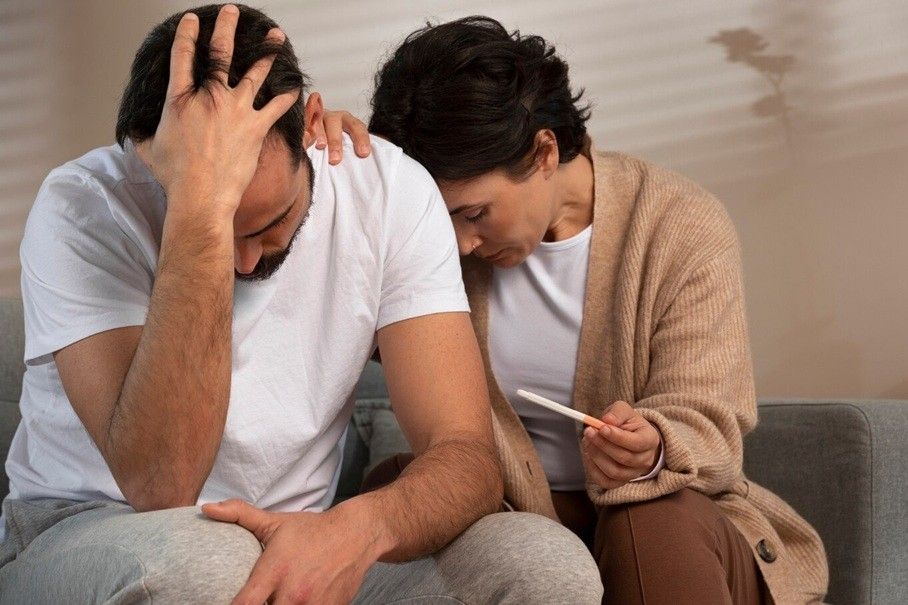
Avoidant-avoidant couples rarely come to therapy because of a dramatic rupture. More often, they arrive after a life transition exposes the thinness underneath the calm. A pregnancy that suddenly requires real coordination and vulnerability. A parent’s illness that neither partner knows how to emotionally support the other through. A move that forces decisions neither partner wants to openly negotiate. In each case, the couple discovers that they have spent years avoiding the exact skill set the moment now requires.
Sometimes the pattern surfaces even more quietly, through a slow-building sense of loneliness that one or both partners cannot quite name, since nothing is technically wrong. I have had clients describe this as feeling like a well-run household with a roommate rather than a marriage, a description that usually lands with real grief once they say it out loud, precisely because so little on the surface would explain that feeling to an outside observer.
How This Differs From an Anxious-Avoidant Pairing
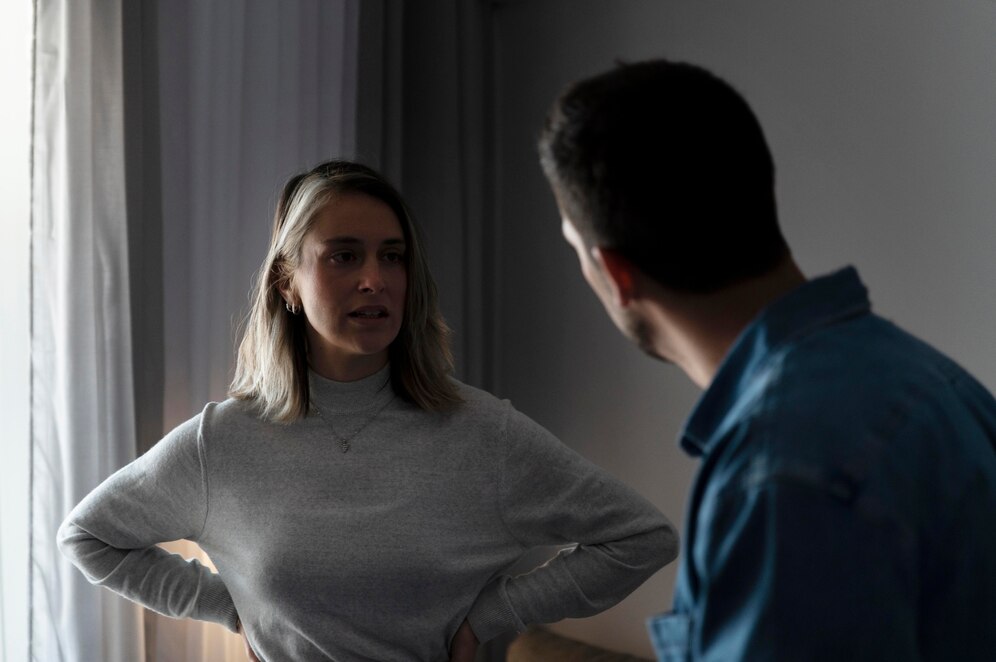
Most of the popular writing on attachment in relationships focuses on the anxious-avoidant pairing, the pursue-withdraw cycle where one partner seeks closeness and the other retreats from it — something I’ve written about separately for readers navigating that specific dynamic. That dynamic is loud. Someone is protesting, someone is distancing, and the friction between the two styles eventually pushes the couple toward a crisis point that is hard to ignore. An avoidant-avoidant pairing rarely produces that kind of pressure, which is part of why it can go unaddressed for so much longer. There is no one in the relationship playing the role of pursuer, no one pushing for more, so the erosion happens quietly and gradually instead of through visible conflict.
This also means avoidant-avoidant couples often do not recognize themselves in relationship content built around the anxious-avoidant trap, since none of the classic protest behavior, the anxious texting, the jealousy, the fear of abandonment, is present in their relationship. They can read an entire article about attachment styles and conclude that neither dynamic applies to them, simply because the loudest, most commonly discussed pattern is not theirs. In my clinical experience, this is exactly why so many avoidant-avoidant couples do not seek help until a specific life event forces the issue, rather than recognizing the pattern in themselves earlier on.
What Actually Helps
An avoidant-avoidant relationship is not inherently doomed, but it does not tend to deepen on its own, since neither partner’s default instincts push the relationship toward more closeness. Change usually requires making vulnerability a deliberate practice rather than something either partner waits to feel ready for. In session, this often looks like structured check-ins, a specific time each week to share something honest, rather than hoping it happens organically, because for two avoidant partners it typically will not happen organically no matter how much time passes.
It also requires each partner doing some individual work on where their own avoidance came from, since understanding the original adaptive purpose of the pattern makes it much easier to recognize in the moment rather than simply feel accused of being “too distant” by a partner who is, honestly, being just as distant themselves. One partner usually has to be willing to go first in taking a small emotional risk, and part of my work with these couples is helping whichever partner feels most ready to tolerate the discomfort of that first move, since waiting for total mutual readiness can stall the process indefinitely.
Finally, it helps enormously for both partners to actively practice noticing and naming positive moments with each other, given how easily avoidant individuals can let warmth pass by unregistered. A simple habit of saying out loud “I liked that” or “that mattered to me” can start to counteract years of good moments quietly going unclaimed by either partner.
Getting Support for Avoidant-Avoidant Patterns in NYC
If your relationship feels peaceful but strangely distant, or if you and your partner have realized you are more like well-coordinated roommates than true partners, that gap is worth addressing directly rather than assuming it will resolve on its own. At Uncover Mental Health Counseling, our couples therapists are licensed across New York State and work virtually with individuals and couples throughout the five boroughs, including many high-achieving professionals, first-generation Americans, and immigrants whose family and career environments reinforced avoidant patterns long before this relationship began.
Two avoidant partners can build a genuinely close relationship, but it tends to require choosing that closeness on purpose, again and again, rather than waiting for it to arrive on its own.
About the Author
Kristie Tse, LMHC-D, is the founder of Uncover Mental Health Counseling, a virtual private-pay therapy practice licensed across New York State. Her clinical background is in mental health counseling with a specialization in gender, sexuality, and identity development, and she works primarily with high-achieving adults navigating anxiety, relationship patterns, and identity, including Asian American and immigrant communities, LGBTQ+ individuals, and first-generation Americans. Kristie is fluent in English, Cantonese, and Mandarin, and her clinical writing and commentary have appeared in HuffPost, Verywell Mind, Well+Good, and Bustle.