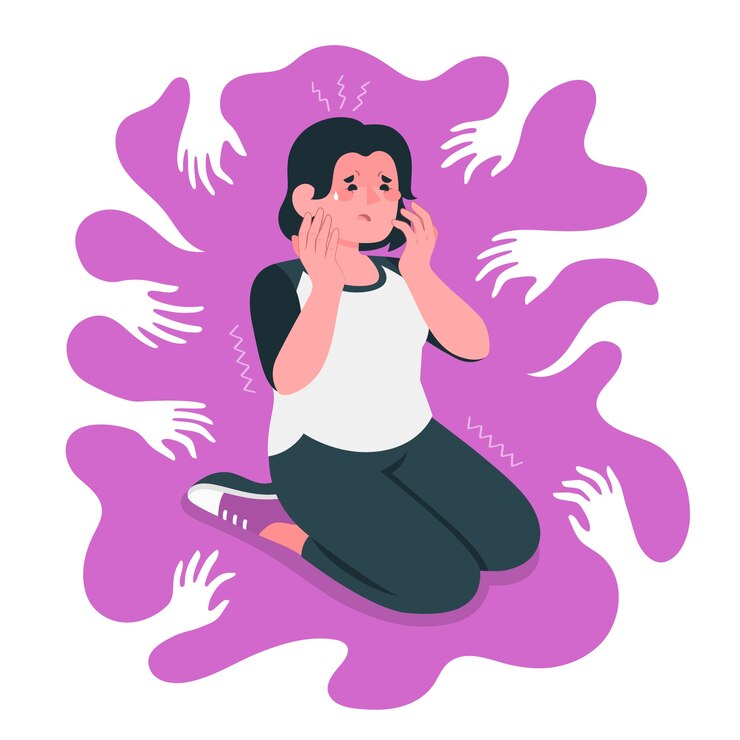
Your brain keeps working after hours because it treats unfinished tasks and open worries as things to solve. To switch off, close the loops on purpose: end the day with a short shutdown routine that writes down tomorrow’s tasks, set clear limits on messages, add a physical “transition” between work and home, and give your mind something else that absorbs it. If it still won’t stop after a few weeks, it may be a sign of burnout or anxiety worth talking to someone about.
If this sounds familiar, our stress and burnout therapy is private, online and starts with a free 15-minute consultation.
You close the laptop at 7:30. By 7:45 you’re replaying a meeting, at 9 you’re drafting an email in your head, at 2am you’re awake, running next week’s deadlines. You are home, but part of you never left the office.
If this is your normal, you’re in good company, especially in a city where being busy is a badge. It’s also fixable, and this guide shows how.
Why can’t I stop thinking about work?
There are a few common reasons, and more than one often applies.
- Open loops. The mind keeps unfinished tasks active in the background. An email you haven’t answered or a decision you haven’t made can keep coming back until you deal with it or write it down.
- Always-on tools. Phones, Slack and email mean work arrives where you relax. Without a clear end to the day, there is no signal for your brain to stop.
- Home is the office. If you work from your apartment, your desk, your couch and your bed may all be in one room.
- Identity. If your worth feels tied to performance, switching off can feel risky, as if relaxing means falling behind.
- A stress response that stays on. After a pressured day your body may still be running as if something is wrong. You’ve left the situation but your system hasn’t caught up.
- Habit. Planning and problem-solving are skills that got you here. Without practice at turning them off, they run all night.
What the research says about switching off
Psychologists call this psychological detachment: mentally disconnecting from work during your free time. Reviews of the research find that people who detach better tend to report less strain and better well-being, while heavy workload makes detachment harder (Sonnentag and Fritz, via CDC STACKS). Experiments by Sonnentag and Niessen found that detaching from work reduced negative mood (Sonnentag & Niessen, 2020). Leaders who respect boundaries are also linked to better detachment and less emotional exhaustion in their teams (Sonnentag, Kark & Venz, 2024).
Put simply, rest from work isn’t only about leaving the building. Your mind has to leave too.
A five-step routine to switch off after work
You don’t need to do all five. Start with step 1 and add the others as you go.
1. Do a five-minute shutdown at the end of the day
Before you finish, spend five minutes closing the loops:
- Write down every unfinished task and worry that’s in your head.
- Pick the top three things for tomorrow and note the first step for each.
- Check your calendar for tomorrow so there are no surprises.
- Say a closing phrase out loud or in your head: “Done for today.”
A small study at Baylor University found that people who spent five minutes writing a specific to-do list before bed fell asleep about nine minutes faster than those who listed things they’d already done (Baylor University). It was 57 healthy university students in a sleep lab, so it’s one study, but it matches what many people find: getting tasks out of your head and onto paper helps your mind let go.
2. Create a transition between work and home
If you used to commute, your commute did this job. When you work from home, you have to build one:
- Take a 10-minute walk around the block, as if you were walking home.
- Change clothes, wash your face, or have a shower.
- Put the laptop and work phone out of sight, in a bag or a drawer.
- Play one song or a short podcast that marks the shift.
Pick one you can repeat every day. The repetition is what teaches your brain.
3. Set limits on messages
You can’t relax if you’re waiting for a ping.
- Turn off work notifications after your finish time, or use “do not disturb” with a short list of people who can reach you.
- Remove email and Slack from your phone’s home screen, or log out in the evening.
- Tell your team your usual hours. Many people find that clear expectations lower the pressure more than staying available.
- If your job has real on-call duties, set specific windows for checking rather than leaving it open all evening.
4. Give your mind a worry window
If worries keep popping up, give them a place instead of fighting them.
- Set a 10-minute “worry time” earlier in the evening, away from bed.
- When a work thought appears later, tell yourself: “That’s for worry time,” and add it to the list.
- In worry time, ask for each item: Can I do something about this? If yes, write the first step. If not, note it and let it go for tonight.
This keeps the thoughts from running all night.
5. Do something that absorbs you
The brain lets go more easily when it has something else to do. It works best when the activity needs a little attention, such as cooking a real meal, a workout class, a puzzle, music, a hobby, or time with a friend. Scrolling your phone often keeps the mind half at work, so it rarely helps.
A calmer body helps too. Slow your breath (in for four, out for six), stretch your neck and shoulders, or try some of the simple somatic exercises for stress and tension.
When you can’t switch off at night
If work thoughts hit when you’re trying to sleep:
- Keep a notepad by the bed and write the thought down. You can deal with it tomorrow.
- Get up if you’ve been awake for a long time and do something quiet and dim until you feel sleepy.
- Don’t check email or messages. Seeing a message restarts the loop.
- Avoid solving problems in bed. Tell yourself you’ll handle it at a set time tomorrow.
Our guide to how to stop overthinking goes deeper on thoughts that spiral. And if you’re looking for ways to unwind after a long day in the city, our post on decompressing after work in Brooklyn Heights has a few ideas. [Confirm this link before posting.]
Is it just a habit, or something more?
Sometimes not being able to switch off is a habit. But it can also be a sign of something that needs more support. Consider talking to a therapist if:
- you’ve tried these steps for several weeks and nothing changes,
- you feel exhausted, cynical or detached from work,
- you’re having panic, constant dread or trouble sleeping most nights,
- work thoughts are straining your relationships or your health,
- you can’t enjoy anything when you’re not working.
In a 2025 American Psychological Association survey, 42% of workers who were worried about job security said work stress made it hard to sleep (APA, May 2025). That number is for that group, not all workers, but it shows how often work stress follows people home.
Therapy for this isn’t about managing your calendar. It looks at what keeps you in overdrive: perfectionism, fear of falling behind, difficulty saying no, or a body that’s learned to stay on guard. Many people find that working on those makes the practical steps stick.
If you’re in crisis or thinking about harming yourself, call or text 988 (the Suicide & Crisis Lifeline) or go to your nearest emergency room.
Talk to someone about work stress Our licensed New York therapists work with stress, burnout and the pressure of high-demand careers through private video sessions, seven days a week, 9am to 9pm, so you can fit sessions around your schedule. Start with a free 15-minute consultation. Book a free 15-minute consultation
Frequently asked questions
How do I stop thinking about work when I’m at home?
Close the day on purpose. Spend five minutes writing down open tasks and tomorrow’s top three, then create a clear transition (a walk, a change of clothes, putting the laptop away). Turn off work notifications, and give your mind something absorbing to do. If worries return, save them for a short “worry time” earlier in the evening.
Why can’t I switch off after work?
Usually it’s a mix of open loops (unfinished tasks), always-on tools, a body still in stress mode, and a habit of problem-solving all the time. For some people it also reflects deeper pressure about performance or worth. If it continues for weeks, it may signal burnout or anxiety.
What is a shutdown routine?
A short, repeatable set of steps that marks the end of your workday: reviewing what’s unfinished, listing tomorrow’s priorities, closing your tabs and apps, and saying you’re done. The idea is that your mind has a clear signal that the work is handled, so it can stop holding onto it.
How do I relax after work when I work from home?
Build a “commute”: walk around the block, change clothes, or put the laptop out of sight. Try to keep work to one spot, so your couch and bed aren’t also your office. Then do something that fully absorbs you, such as cooking, exercise or seeing a friend.
When should I see a therapist about work stress?
If you’ve tried practical steps for a few weeks without change, feel exhausted or detached, sleep badly most nights, or find it’s affecting your health or relationships, it’s worth talking to a therapist. Early support is easier than waiting until you’re burned out.