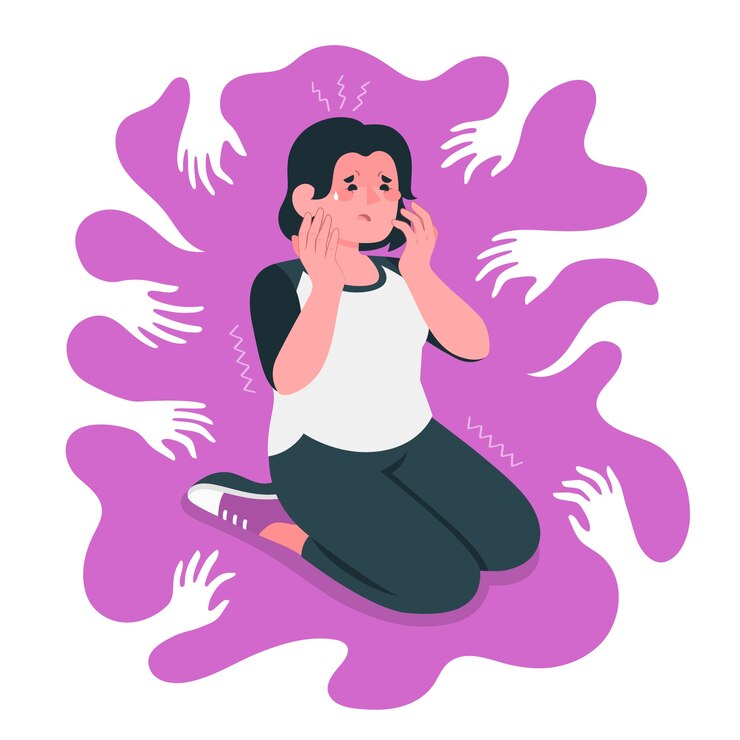
If you’re searching for OCD therapy near me in New York City, here’s the more useful question to ask: not who’s closest, but who’s actually trained to treat it. OCD requires specialist treatment. Not because other presentations of anxiety do not deserve clinical attention, but because OCD has a specific mechanism, the obsession-compulsion cycle, that is maintained by the exact strategies that instinct and general anxiety management suggest, and that only responds to treatment approaches designed specifically for it.
Finding an OCD therapist in New York City means finding someone who understands this mechanism at a clinical depth, who is trained to deliver Exposure and Response Prevention therapy, and who has the specific clinical experience to work with the full range of OCD presentations, including the ones that do not look like what most people imagine when they think of OCD.
This post tells you how to find that person, what to ask, and what the answers reveal about whether the therapist is actually equipped for this work.
Why OCD Requires Specialized Treatment
OCD is maintained by a specific cycle: the obsession generates distress, the compulsion provides temporary relief, the relief reinforces the compulsion, and the temporary nature of that relief means the cycle restarts. The compulsion is not irrational. It works, in the short term, exactly as advertised. What it does not do is break the cycle. It maintains it.
NIMH identifies Exposure and Response Prevention (ERP) as the first-line psychological treatment for OCD, with Cognitive Processing Therapy and medication as complementary approaches. No other psychotherapy approach has comparable evidence for OCD specifically.
The reason this matters when evaluating therapists is that most therapists who claim to treat anxiety, and therefore OCD, are not trained in ERP. They may be excellent clinicians. They may have helped many people. They are not the right clinician for OCD, and working with a non-ERP-trained therapist for OCD has two specific costs: the OCD is not treated, and the alternative strategies being used, relaxation, cognitive restructuring, distraction, typically reinforce the compulsion cycle rather than interrupting it.
A therapist who is trained in CBT but not specifically in ERP, and who applies standard CBT techniques to OCD, may actually make the OCD worse by adding cognitive rituals to the compulsion repertoire.
What OCD Actually Looks Like: The Presentations That Get Missed
OCD is one of the most consistently misrepresented conditions in public understanding. The television version, the person who washes their hands repeatedly or arranges objects symmetrically, is real but represents only a fraction of OCD presentations. The presentations that are most commonly missed, and most commonly undertreated by non-specialist therapists, are the ones that do not involve visible behavioral rituals.
Harm OCD. Intrusive thoughts about harming others, including people the person loves. Deeply ego-dystonic, meaning they are in direct conflict with the person’s values and cause significant distress precisely because the person is not someone who would ever act on them. Frequently mistaken for a safety concern rather than recognized as OCD.
Relationship OCD (ROCD). Obsessive doubt about the relationship: whether you love your partner enough, whether they are right for you, whether your feelings are real. The distress is about the uncertainty itself, not about a specific problem in the relationship. Frequently misdiagnosed as relationship difficulty or anxiety rather than recognized as OCD.
Pure O. A misnomer for OCD presentations where the compulsions are primarily mental rather than visible behavioral rituals: mental reviewing, reassurance-seeking, neutralizing thoughts, analyzing intrusive thoughts. Because there is no visible compulsion, the presentation is often not recognized as OCD by non-specialist therapists.
Scrupulosity. Obsessive concerns about morality, religion, or doing the right thing. Intrusive thoughts about having done something wrong or sinful, compulsive confessing, excessive prayer as a compulsion. Often misunderstood as a religious concern rather than a clinical one.
Contamination OCD. The presentation most commonly recognized, but still frequently undertreated because the treatment, systematic exposure to the feared contamination without the compulsive cleaning or avoidance, is counterintuitive and requires specific clinical skill to deliver safely and effectively.
Health anxiety OCD. Intrusive concerns about illness or bodily symptoms, compulsive checking, reassurance-seeking from medical professionals, repeated body checking. Distinguished from health anxiety by the compulsive response pattern rather than the worry content alone.
A therapist who has worked extensively with OCD will recognize all of these presentations. A therapist who knows OCD primarily from general clinical training or from the standard cultural representation will likely recognize only a fraction of them.
The Questions That Reveal Whether a Therapist Is Actually Specialized in OCD
“What is your clinical approach to OCD specifically, and what training do you have in it?”
The answer should name ERP explicitly and should describe the specific training the therapist has completed. The International OCD Foundation offers training that is recognized in the field. Completion of specific ERP training supervised by an OCD specialist is the relevant credential. A therapist who describes their OCD approach as “CBT” without specifically naming ERP, or who says they use “a variety of approaches,” is not demonstrating ERP specialization.
“Can you describe how you would approach harm obsessions or relationship OCD with a client?”
This question tests whether the therapist is familiar with atypical OCD presentations. A specialist will answer with confidence and clinical specificity: they will describe how harm obsessions are treated with ERP, will explain that the intrusive thoughts are ego-dystonic and do not reflect intent, and will describe exposure tasks that target the feared content. A non-specialist will typically demonstrate discomfort with the question or will describe a more exploratory approach that does not reflect ERP principles.
“How do you think about the difference between accommodation and support in OCD treatment?”
Accommodation, adjusting the environment or providing reassurance to reduce the OCD’s distress, is one of the most important concepts in OCD treatment for the client, but also for the therapist. A therapist who does not understand accommodation, or who believes that providing reassurance to a client in distress is supportive, is not equipped for OCD treatment. A specialist will describe accommodation as a maintenance factor for OCD and will explain how they work to reduce it within the therapy.
“What does the between-session work look like in your approach to OCD?”
ERP is not only in-session work. Between-session exposure practice is central to effective treatment, and a specialist will describe this explicitly. A therapist whose answer focuses entirely on the in-session relationship without describing between-session work is not delivering ERP.
What to Watch For in the First Few Sessions with an OCD Therapist in NYC
Even with the right answers to the right questions, the first few sessions reveal whether the clinical approach is actually ERP-based.
The therapist builds an exposure hierarchy with you. Early in ERP treatment, the therapist works with the client to map the OCD’s territory: the obsessions, the feared outcomes, the compulsions, and the distress level associated with different triggers. From this, they build a graduated hierarchy. If the first sessions are primarily exploratory without this structured mapping, the therapist may not be delivering ERP.
The therapist explains the rationale for ERP explicitly. Why the approach works, what inhibitory learning means, why the avoidance of the obsession maintains it, why the compulsion needs to not be performed: a good ERP therapist explains the logic explicitly so the client understands what they are doing and why.
The therapist does not provide reassurance. A hallmark of ERP is the deliberate non-provision of reassurance, because reassurance functions as a compulsion that maintains the cycle. A therapist who responds to OCD-driven requests for reassurance with reassurance is not delivering ERP.
The therapist is direct about what the work requires. ERP is not comfortable. A therapist who minimizes the difficulty of the work or who frames it as gentler than it is is not setting accurate expectations.
How Does OCD Show Up in New York City
New York City’s environment has specific features that interact with OCD in ways worth naming.
The density of triggers. For contamination OCD, the subway, public surfaces, and crowded spaces are a continuous trigger environment. For harm OCD, the density of people creates constant potential exposure to obsessional content. For scrupulosity, a city with enormous diversity of moral and ethical frameworks creates ongoing questions about right and wrong. New York City is not a calming environment for OCD, which both makes treatment more important and provides an unusually rich exposure environment for ERP.
The high-achievement culture and OCD. Perfectionism, checking, and excessive preparation are rewarded in New York’s professional environments, which makes it possible to go years without recognizing that what appears to be conscientiousness is actually OCD. The attorney who reviews every document three times, the executive who cannot leave without checking that all the doors are locked, the analyst whose need for certainty interferes with decision-making: these are presentations where OCD and professional culture overlap in ways that delay recognition and treatment.
The mental health literacy and the OCD knowledge gap. New York City’s population is in many ways unusually mental health literate. People seek therapy, know their diagnoses, and understand their conditions. OCD is an exception: despite high general mental health literacy, OCD remains poorly understood because its actual presentations diverge so significantly from its public representation. Many people in New York carry OCD without knowing it, and many of those who do have a diagnosis are receiving inadequate treatment because their therapist is not an OCD specialist.
As Kristie Tse, LMHC-D, describes it: “OCD is one of the conditions I feel most strongly about specialization for, because the wrong treatment actively makes it worse. A client who spends months in supportive therapy or general CBT for OCD is not just not getting better. They are typically getting more entrenched. The sooner someone gets to a therapist who actually knows how to treat OCD, the better the outcome.”
How to Find an OCD Therapist in NYC
The IOCDF therapist directory. The International OCD Foundation maintains a directory of therapists who have self-identified as OCD specialists and who have completed ERP training. This is the most targeted resource for finding OCD-specialized therapists in New York City.
Psychology Today with OCD filter. Psychology Today’s therapist directory allows filtering by OCD as a specialty. This will produce a broader list than the IOCDF directory and requires the additional vetting questions described above to evaluate which therapists are genuinely ERP-trained.
Referrals from OCD community resources. The OCD community in New York, including support groups and advocacy organizations, often has informal knowledge of which therapists are genuinely specialized. OCD NYC and the IOCDF’s local affiliate can sometimes provide referrals.
The consultation as evaluation. Every consultation should include the questions described above. A therapist who is genuinely specialized will welcome the questions and answer with specificity. A therapist who deflects, speaks in generalities, or seems unfamiliar with ERP is telling you something important.
How We Work With OCD at Uncover Mental Health Counseling
At Uncover Mental Health Counseling, OCD treatment draws on ERP principles within an integrated clinical approach that addresses the anxiety dimension of OCD alongside the exposure work. Our clinical approach to OCD includes:
- Structured assessment and hierarchy building
- Psychoeducation about OCD’s mechanism and the rationale for ERP
- Graduated exposure work within the session and through between-session practice
- Attention to accommodation and its role in maintaining the OCD
- Integration of CBT principles for the cognitive dimensions of OCD presentations alongside the ERP core
Sessions are virtual, which for some OCD presentations provides clinical advantages: in-vivo exposure work can occur in the client’s actual environment rather than requiring simulation.
Frequently Asked Questions
Why do so many therapists say they treat OCD but so few actually do?
OCD is listed as a specialty on more therapy profiles than any other condition relative to the actual rate of OCD specialization in the field. This is partly because OCD is associated with anxiety, which most therapists do treat, and the distinction between anxiety treatment and OCD-specific treatment is not widely understood outside the field. The vetting questions in this post exist precisely because the self-reported specialty is not a reliable indicator.
I have OCD and have been in therapy for years without much improvement. What does that mean?
It likely means the treatment you received was not ERP or was not adequately ERP-based. Years of supportive therapy, CBT without ERP, or approaches that provide accommodation rather than exposure consistently produce limited results for OCD. This is not a reflection of your effort or the severity of your OCD. It is a reflection of the treatment not being the right treatment. Starting ERP with a specialist, even after years of other approaches, typically produces meaningful improvement.
Is medication necessary for OCD treatment?
Not universally, but for many people the combination of ERP and medication, typically an SSRI at doses higher than those used for depression, produces better outcomes than either alone. For moderate to severe OCD, a consultation with a psychiatrist alongside the ERP therapy is worth considering. At Uncover, we coordinate with prescribing providers when medication is part of the treatment picture.
Can OCD be treated virtually?
Yes, and ERP in particular has specific advantages in a virtual format: exposures can be conducted in the client’s actual environment, which is often where the OCD is most active, rather than simulated in an office. ERP via telehealth has been validated in research for OCD and is now standard practice for many OCD specialists.
My OCD involves harming someone I love. I am afraid to tell a therapist. What should I know?
Harm obsessions are one of the most stigmatized and most misunderstood OCD presentations, and the fear of disclosing them to a therapist is one of the most significant barriers to treatment. What you need to know: harm obsessions occur in people who are specifically not dangerous, because the thoughts are ego-dystonic and cause significant distress. They are a symptom of OCD, not a reflection of intent. A specialist in OCD will recognize them as such and will not treat your disclosure as a safety concern. Finding a therapist who specializes in OCD before you disclose is the most protective approach.
Ready to Find a Therapist Who Actually Knows How to Treat OCD?
OCD requires a specialist. The difference between a well-meaning generalist and a trained OCD specialist is not a matter of degree. It is a matter of whether the treatment actually works.
Uncover Mental Health Counseling offers virtual OCD and anxiety treatment across New York State, drawing on ERP principles and evidence-based clinical approaches for the full range of OCD presentations. Our clinicians understand what OCD actually is, what it actually looks like, and what actually treats it.
Book a free consultation to get started.
About the Author
Kristie Tse, LMHC-D (NY License #009672) is the founder of Uncover Mental Health Counseling, a virtual private pay practice in New York State. She specializes in attachment, relationships, anxiety, and identity with high-achieving adults, and has a particular focus on Asian American adults, LGBTQ+ individuals, and first-generation Americans. Her work has been featured in HuffPost, Verywell Mind, Well+Good, and Bustle.