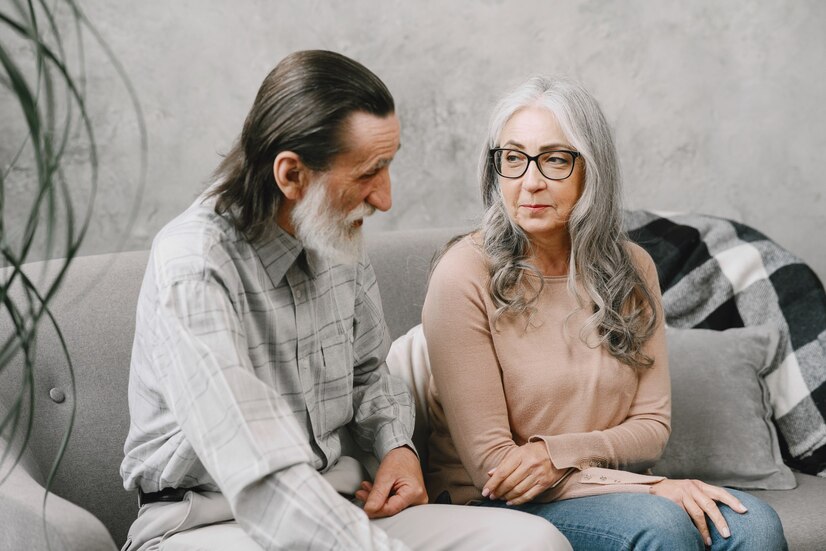
Most couples who finally make the call to find a marriage counselor in New York City have been thinking about it for longer than they want to admit. Dr. John Gottman’s research has found that unhappy couples wait an average of six years after problems begin before seeking professional help — six years of chronic conflict, resentment, criticism, or quiet disconnection before asking for support.
By the time most couples arrive in a therapist’s office, the presenting issue, whether it is communication, intimacy, trust, or conflict — is rarely the whole picture. It is the accumulated weight of years of unaddressed dynamics that have slowly shifted the foundation of the relationship. The sooner couples seek support, the more room there is to work with. But it is also true, and worth saying directly, that couples who arrive late can still do meaningful work when both people are genuinely willing.
Finding the right marriage counselor in New York City is not primarily a logistical question. It is a clinical one. This post is intended to help you understand what to look for, what the process actually involves, and what distinguishes effective couples therapy from something that keeps you busy but doesn’t change anything.
What Marriage Counseling in NYC Actually Is
Marriage counseling, also referred to as couples therapy, is a specialized form of psychotherapy focused on the relationship as the primary client rather than either individual within it. This distinction matters clinically. A good couples therapist is not an advocate for either partner. They are an advocate for the relationship’s health, which sometimes means saying things neither partner wants to hear.
The American Psychological Association notes that couples therapy has a strong evidence base, with the majority of couples reporting significant improvement in relationship satisfaction following treatment. The most well-researched approaches include the Gottman Method, Emotionally Focused Therapy (EFT), and Cognitive Behavioral Couples Therapy, each of which addresses the relational system from a somewhat different angle.
What marriage counseling is not: mediation, where a neutral third party helps two people negotiate a settlement. It is not a referee. It is not a process where each person makes their case and the therapist decides who is right. And it is not a guarantee that the marriage will continue. In some cases, couples therapy clarifies with honesty and support that the relationship has run its course. That outcome, while painful, can be more valuable than years of managed unhappiness.
What to Look For in an NYC Marriage Counselor
New York City has more therapists per capita than almost anywhere in the world. That abundance is an asset and a complication. Not every therapist who sees couples has specialized training in couples work, and the difference between a therapist who does individual work with two people in the room and a genuinely trained couples clinician is significant.
When you are evaluating a marriage counselor in New York City, several things are worth assessing:
Specialized couples training. Ask directly whether the therapist has specific training in couples therapy. Credentials to look for include training in the Gottman Method, Emotionally Focused Therapy, or Integrative Behavioral Couples Therapy. A therapist who primarily does individual work and occasionally sees couples is not the same as a clinician whose practice is built around relational work.
Clinical approach and philosophy. Understanding how a therapist conceptualizes couples work helps you assess whether their approach fits your situation. Some approaches are more structured and skill-focused. Others are more exploratory and attachment-based. Neither is inherently superior, but the fit between the approach and what you are actually dealing with matters.
Cultural competence. In a city as diverse as New York, a marriage counselor who works well with the full range of couples who live here needs genuine cultural fluency. This includes understanding the specific relational pressures facing immigrant and first-generation couples, LGBTQ+ couples navigating relational structures that may not fit traditional frameworks, and high-achieving professional couples whose particular dynamics differ meaningfully from the population most couples therapy research was built around.
Availability and format. New York couples face real logistical challenges: demanding schedules, long commutes, the difficulty of coordinating two people’s availability for a weekly appointment. Virtual therapy has become an increasingly well-researched and clinically effective option, and for many New York couples it is the format that makes consistent attendance actually possible. A therapist who offers virtual sessions removes one of the primary logistical barriers to couples work in this city.
Private pay vs. insurance. Most specialized couples therapists in New York City are private pay, for a clinical reason: insurance typically covers treatment of an individual’s diagnosed mental health condition, not relationship difficulties. Private pay practices are able to focus on the relational work without the constraints of diagnostic coding and session limits that insurance imposes. Understanding the cost upfront and factoring it into the decision is worth doing before the first session rather than after.
What to Expect in Marriage Counseling
One of the most common sources of disappointment in couples therapy is misaligned expectations about what the process involves and how quickly change happens. Setting accurate expectations from the start tends to produce better outcomes.
The first few sessions are assessment, not treatment. A clinically rigorous couples therapist will spend the early sessions developing a thorough understanding of the relationship: its history, the presenting concerns, each partner’s individual background and attachment history, and what each person actually wants from the work. Some of this assessment happens with both partners together. Many therapists also meet individually with each partner at least once, to create space for honest disclosure that might not be possible in a joint session. The assessment shapes everything that follows.
Progress is rarely linear. Couples therapy often gets harder before it gets easier. As the work creates more space for honesty, things that have been managed or avoided sometimes surface more acutely. Partners who expected the therapy to reduce tension in the short term can be caught off guard when it initially increases it. This is not a sign that the therapy is failing. It is often a sign that it is working.
Both people need to be genuinely engaged. Couples therapy where one partner is substantially more committed to the process than the other tends to produce limited results. This does not mean both people need to arrive enthusiastically. Many people come in skeptical, resistant, or going through the motions for their partner’s sake. But at some level, both people need to be willing to be honest and to do the work between sessions, not just in the room.
Change happens between sessions, not only in them. The hour in the therapist’s office is a container for the work. The real change happens in the relationship itself, in how partners respond to each other during the week, in whether the insights from the session get applied in the ordinary moments of shared life. Couples who treat therapy as a weekly event rather than a process that operates between sessions tend to progress more slowly.
Timeline varies significantly. Some couples with relatively contained presenting concerns see meaningful change in eight to twelve sessions. Couples navigating more significant issues, including infidelity, chronic disconnection, or deep attachment wounds, typically need longer. In my clinical experience, couples who come expecting a quick fix and couples who come prepared for a genuine process tend to get very different results, regardless of the severity of the presenting issue.
Common Reasons NYC Couples Seek Marriage Counseling
While every couple’s situation is specific, the presenting concerns that bring New York City couples to marriage counseling tend to cluster around a few recognizable patterns.
Communication breakdown. The same arguments cycling without resolution. Conversations that escalate before either person understands what actually happened. The sense that something is being communicated in the relationship but neither person can reach it directly. Our post on communication therapy addresses this territory in depth.
Intimacy and connection erosion. The gradual withdrawal of emotional and physical closeness that happens when life crowds out the relationship. For high-achieving New York couples with demanding careers and limited time, this is among the most common presentations. Left unaddressed, this kind of chronic relational strain can also take a toll on individual mental health — NIMH notes that stable, supportive relationships are one of several protective factors for overall mental wellbeing, and their erosion can compound anxiety or low mood that may already be present.
Trust ruptures. Whether following infidelity or through a slower erosion of reliability and presence, trust issues are among the most common reasons couples seek help in New York City’s high-pressure environment.
Life transition stress. The arrival of children, a major career shift, a relocation, a health crisis: transitions that were supposed to bring couples together often reveal fault lines that were already present. New York’s pace means that the relational processing that transitions require often gets deferred until the accumulated pressure demands attention.
Pre-marital work. Couples who want to build a strong foundation before marriage rather than repair one after damage has accumulated. Our post on premarital counseling in NYC covers this territory specifically.
Marriage Counseling in NYC for Specific Populations
New York City’s diversity means that effective marriage counseling cannot apply a one-size-fits-all framework. Several populations have specific clinical needs that are worth naming directly.
LGBTQ+ couples. Same-sex and queer couples navigate relational dynamics, family contexts, and social pressures that differ significantly from heteronormative frameworks. A marriage counselor who works effectively with LGBTQ+ couples needs genuine affirmative training and clinical fluency, not just a statement on their website.
First-generation and immigrant couples. Couples where one or both partners are navigating the intersection of cultural heritage and American relational norms often face specific tensions around family involvement, gender roles, communication styles, and what the marriage is expected to be and do. A clinician without cultural competence in this territory can inadvertently apply frameworks that miss the actual dynamics entirely.
High-achieving professional couples. Two ambitious, driven people building demanding careers and a marriage simultaneously face specific friction points that couples therapy needs to account for: the competition that can develop between high achievers, the difficulty of genuine vulnerability between two people accustomed to presenting competence, the relational cost of work environments that demand their best performance while the relationship gets what’s left.
Working With an NYC Marriage Counselor at Uncover
Uncover Mental Health Counseling is a private pay, virtual therapy practice in New York State. Our founder, Kristie Tse, LMHC-D (NY License #009672), has clinical experience working with couples navigating communication breakdown, intimacy erosion, trust ruptures, and the relational pressures specific to life in New York City.
We work with couples across New York City, including high-achieving professionals, first-generation and immigrant couples, and LGBTQ+ couples whose relational contexts and histories require a clinician who brings both clinical depth and genuine cultural fluency to the work.
Our sessions are fully virtual, which for most New York couples is not a compromise but a practical advantage: no commute, no coordinating schedules around travel time, and the ability to do the work from the space you actually share.
If you are ready to invest in your marriage with the support of a clinician who will be honest with you about what the work requires, we would be glad to talk. Schedule a free consultation or learn more about our relationship therapy services.
About the Author
Kristie Tse, LMHC-D (NY License #009672) is the founder of Uncover Mental Health Counseling PLLC, a virtual therapy practice in New York State. She has been featured in HuffPost, Verywell Mind, Well+Good, and Bustle, among other publications, discussing relationships, couples therapy, and mental health.