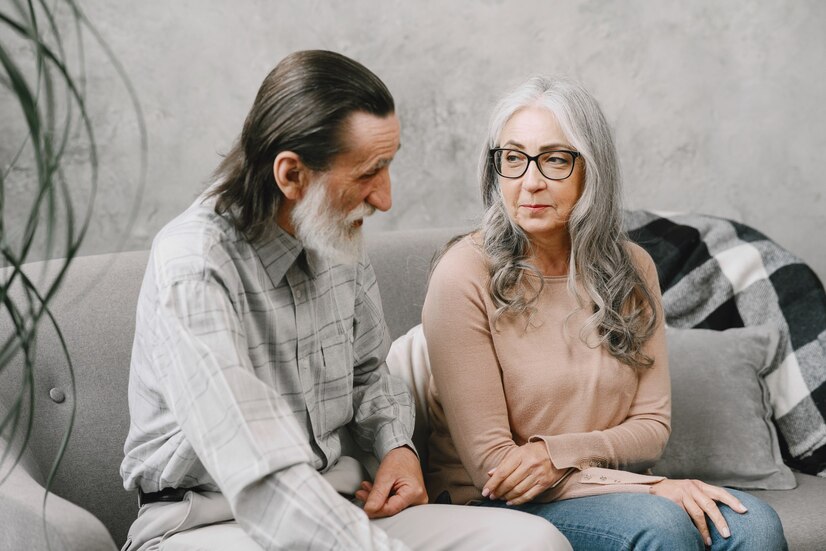
Most couples who come to premarital counseling in New York City are not in crisis. They are not coming because something is wrong. They are coming because something is right, and they want to protect it.
That distinction matters, because premarital counseling still carries a faint cultural stigma in some communities: the idea that you only need a therapist if your relationship is broken. In reality, the research consistently shows the opposite. Couples who engage in premarital counseling before marriage report significantly higher satisfaction and significantly lower rates of divorce than those who don’t. The American Psychological Association notes that premarital counseling is one of the most effective preventive interventions available to couples, with benefits that persist years into marriage.
Coming to premarital counseling in New York City is a particular kind of decision. This city selects for people who are ambitious, intentional, and accustomed to preparing carefully for things that matter. Applying that same intentionality to a marriage makes complete sense. What premarital counseling offers is a structured, supported space to have the conversations that are easy to defer when everything feels good, and that become much harder to have once they’ve been deferred long enough.
Why NYC Couples Seek Premarital Counseling
New York City creates a specific relational context that shapes why couples here benefit from premarital counseling in particular ways.
The timing pressure is real. In a city where everyone is optimizing their life on a timeline, couples often find themselves navigating the decision to marry while also managing demanding careers, apartment logistics, family expectations, and the social pressure of peers who are already engaged, married, or having children. The relational conversation can get crowded out by the logistical one. Premarital counseling creates deliberate space for the former.
Two high-achieving people in one apartment. Many New York couples are both high-achieving, career-driven, and accustomed to being the most competent person in the room. That combination has tremendous strengths, and it also creates specific friction points: around decision-making, around whose career takes precedence when they conflict, around the competition that can quietly develop between two people who are each used to winning. These dynamics are worth naming and working through before they calcify into resentment.
Navigating different cultural backgrounds. New York is one of the most culturally diverse cities in the world, and a significant number of couples here are navigating cross-cultural partnerships, relationships between first- and second-generation Americans, or the negotiation of family expectations that differ significantly between partners. In my clinical experience, these differences rarely sink relationships on their own. What sinks relationships is the assumption that love is sufficient to bridge them without explicit conversation. Premarital counseling provides the structure for that conversation.
The city itself as a stressor. Cost of living, housing instability, commute pressure, the pace of life: New York generates a baseline level of stress that strains even strong relationships. Understanding how each partner responds to stress, what they need when they’re overwhelmed, and how to support each other through it is foundational work that premarital counseling addresses directly.
What Premarital Counseling Actually Covers
Premarital counseling is not primarily about learning communication techniques, though skills do get introduced when they’re useful. It is a structured exploration of the areas most likely to create conflict and disconnection in a marriage, conducted before those areas become flashpoints.
In my clinical work with couples preparing for marriage, the conversations that matter most tend to fall into several core domains:
Money. Financial conflict is one of the leading causes of marital distress, and it is one of the most avoided conversations in early relationships. Premarital counseling creates the space to explore not just the practical questions, including how finances will be structured, who manages what, and how debt is handled, but the emotional ones: what money means to each person, what financial security looks like, and what the unspoken rules about spending and saving each partner brought from their family of origin. In New York, where cost of living is a constant variable and financial stress is endemic, this conversation is particularly important to have explicitly.
Family of origin and in-law relationships. Every person who gets married brings two families into the room. The expectations, communication styles, and relational patterns of each family of origin shape what each partner considers normal in a marriage. Premarital counseling helps couples identify those inherited patterns, understand where they align and where they conflict, and make conscious decisions about how they want to structure their own family rather than defaulting to the templates they grew up with.
In New York specifically, in-law dynamics often carry additional complexity for immigrant families and first-generation Americans, where the cultural expectations around filial duty, family involvement in decisions, and what it means to honor parents can create significant tension between partners navigating different levels of acculturation.
Children and parenting. Whether to have children, when, how many, and how to raise them are questions that couples sometimes avoid because the answers feel too high-stakes to examine before the wedding. Premarital counseling surfaces these conversations in a supported context where they can be explored honestly rather than assumed away. It also addresses parenting values: discipline styles, education priorities, religious upbringing, and the division of parenting labor, which is one of the most common sources of conflict in the transition to parenthood.
Roles and expectations. What does each partner expect the marriage to look like on an ordinary Tuesday? Who manages which domains of the shared life? How are decisions made? These questions often go unasked because each person assumes the other shares their expectations. They frequently don’t. Unexamined assumptions about roles are one of the most common sources of early marital conflict, because the disappointment is not about a single incident but about the gap between what was expected and what is actually happening.
Sex and physical intimacy. This is one of the most important and most avoided topics in premarital conversations. Differing desires, unspoken needs, histories that affect intimacy, and expectations about how physical connection will function in the marriage all benefit from direct, supported conversation before the wedding rather than after years of silent disappointment or avoidance.
Conflict and repair. Every couple fights. The question is not whether conflict will happen but whether the couple has the skills and the relational safety to repair after it. Premarital counseling helps couples understand their individual conflict styles, identify the patterns most likely to escalate, and build explicit repair practices before those patterns have become entrenched. Research from the Gottman Institute shows that it is not the presence of conflict but the ability to repair after it that most predicts long-term relationship satisfaction.
Individual mental health and its relational impact. A conversation that premarital counseling creates space for, and that couples often find the most valuable, is an honest exploration of each partner’s mental health history, including how anxiety, depression, trauma, or past relationship experiences affect how they show up in the relationship now. This is not about pathologizing. It is about understanding each other more completely and building a partnership that can support both people.
What Makes a Good Premarital Counselor in NYC
Not all premarital counseling is the same, and in a city with as many options as New York, it is worth understanding what to look for.
Premarital counseling that is primarily structured around a questionnaire or a checklist can be useful as a starting point, but it tends to stay at the surface. What differentiates effective premarital counseling is a clinician who can hold the complexity of two people’s histories, notice the dynamics playing out in the room in real time, and help couples have the conversations they are unconsciously avoiding, not just the ones on the list.
In my clinical practice, I approach premarital counseling as a hybrid of assessment and intervention. The early sessions are about understanding each person’s history, their family of origin, their attachment style, and the beliefs about relationships they’re bringing into the marriage. The middle sessions focus on the core content areas described above. The later sessions consolidate the learning and establish practices the couple can carry forward.
I also pay particular attention to the cultural context. For couples navigating cross-cultural partnerships, immigrant family dynamics, or the intersection of identity and partnership, including LGBTQ+ couples building relational structures that may not map onto traditional templates, the work requires cultural fluency alongside clinical skill. Cookie-cutter premarital programs were not designed with those realities in mind.
How Long Does Premarital Counseling Take?
Most premarital counseling in New York City runs between six and twelve sessions, depending on what the couple brings and how deeply they want to go. Some couples come with specific concerns they want to address and find six sessions sufficient. Others find the process opens conversations they want to continue more extensively and extend the work accordingly.
The timing matters too. Premarital counseling is most useful when there is enough runway before the wedding to actually process what comes up, not just in session but between sessions in the relationship itself. Starting six months to a year before the wedding is generally ideal. Starting two weeks before is better than not starting at all, but leaves little room for the material to land.
Premarital Counseling in NYC for LGBTQ+ Couples
LGBTQ+ couples in New York City bring relational contexts and histories that standard premarital programs often fail to address. Questions about family acceptance, the experience of building a partnership without the cultural scripts that heterosexual couples can follow, navigating chosen family alongside family of origin, and the specific relational dynamics of queer partnerships all deserve space in the premarital conversation.
At Uncover Mental Health Counseling, we offer affirming, culturally competent premarital counseling for LGBTQ+ couples that meets those realities directly rather than fitting them awkwardly into a framework designed for someone else.
Working With a Premarital Counselor in NYC
Uncover Mental Health Counseling is a private pay, virtual therapy practice in New York State. Our founder, Kristie Tse, LMHC-D (NY License #009672), has clinical experience working with couples navigating the relational, cultural, and identity questions that premarital counseling surfaces.
We work with couples across New York City, including high-achieving professionals managing competing career demands, first- and second-generation Americans navigating family expectations, and LGBTQ+ couples building partnerships on their own terms. Our sessions are fully virtual, which works particularly well for busy New York couples who can’t easily coordinate schedules around a commute to an office.
If you’re engaged or seriously considering marriage and want to invest in the foundation before the wedding, we’d be glad to talk. Schedule a free consultation or learn more about our relationship therapy services.
Kristie Tse, LMHC-D (NY License #009672) is the founder of Uncover Mental Health Counseling PLLC, a virtual therapy practice in New York State. She has been featured in HuffPost, Verywell Mind, Well+Good, and Bustle, among other publications, discussing relationships, couples therapy, and mental health.